English



Online 3D printing quote is a popular instrument that addresses the demand for fast cost evaluation, but often deceives global sourcing engineers looking for answers to the question how much does 3D printing cost per gram in order to determine NPI budget. Quotes do not account for essential aspects such as powder recirculation deterioration, support weight, and thermal gradient distortion, leading to inaccurate calculations, poor mechanical properties, and unaccounted for post-processing.
The process development team at LS Manufacturing unravels the mystery behind the per gram cost by revealing key drivers of costs for Ti-6Al-4V and engineering plastics under rigorous layer thickness constraints. Get valuable insights into conformal topology optimization and save money by cutting unnecessary weight, thus reducing delivery time and TPC without compromising the part strength. Below is the explanation of the underlying bottom-up approach to optimize your ROI.
3D Printing Cost Per Gram: Accurate Quote Quick-Reference
| Cost Driver | How to Control It |
| Material & Waste | Optimize infill utilization (20-30%) and nest several components into one build. |
| Support Material | Design for support material using DFM analysis to keep overhangs <45 degrees and self-support. |
| Build Time (Machine Rate) | Select ideal layer height (0.1-.2 mm) depending on technology. |
| Post-Processing Labor | Preference for as printed surface finish; group same component types. |
| Setup & NRE | Average per volume; skip for order repetition. |
Key Takeaways:
- Price = (Part Volume × Density × $/gram) + Machine Time + Labor + Setup: This information will allow you to know how each parameter goes into your price quotation.
- DFM Shrinks Material Cost: Create design which is self-supporting and create optimum infill designs to reduce the grams price faster.
- Batch to Amortize Setup: Low volume of production leads to high setup cost; batching and increased volume reduces the fixed cost.
- Clarify Finish Expectations Early: Asking for “as printed” instead of “bead blast and dye” skips one labor line in your price quotation.
Why Trust This Guide? Practical Experience From LS Manufacturing Experts
There are numerous “cost per gram” calculators which multiply the weight by some factor and give you a quote. It does not take into account such multipliers as volume support, machine hour, post process, and scrap – multipliers which made a "$12 part" cost $47 on three of our aerospace fixture jobs. Our quoting technique works according to National Institute of Standards and Technology (NIST) measurement science standards. “Per gram” is not guesswork – it is a sequence of costs from STL file to boxed order.
We have also quoted parts with the markups incorporated in scraps: Semiconductor fixtures when support removal increased the price by 35%, automotive PA12 brackets where moisture increased the cost per gram by 18%, and medtech guides when sterile pack became an additional cost item. Our approach to pricing uses the engineering standard of cost modeling from SAE International – so that you don't pay less for build and more for the shocker.
What you will receive is the trap map based on 120+ builds: 12° support angle reduction leads to 25% reduction in support volume (18% per gram savings in material cost) in SLS PA12; 4-hour preheating at 80°C dry air / -40°C dew point reduces losses of PA12 from 12% to below 3%; 0.6mm nozzle + 0.3mm layer decreases machine hours by ≈30% for PLA+ while maintaining ±0.25mm tolerance. And then the per-gram quote will become realistic – not the one that becomes higher after your order placement.
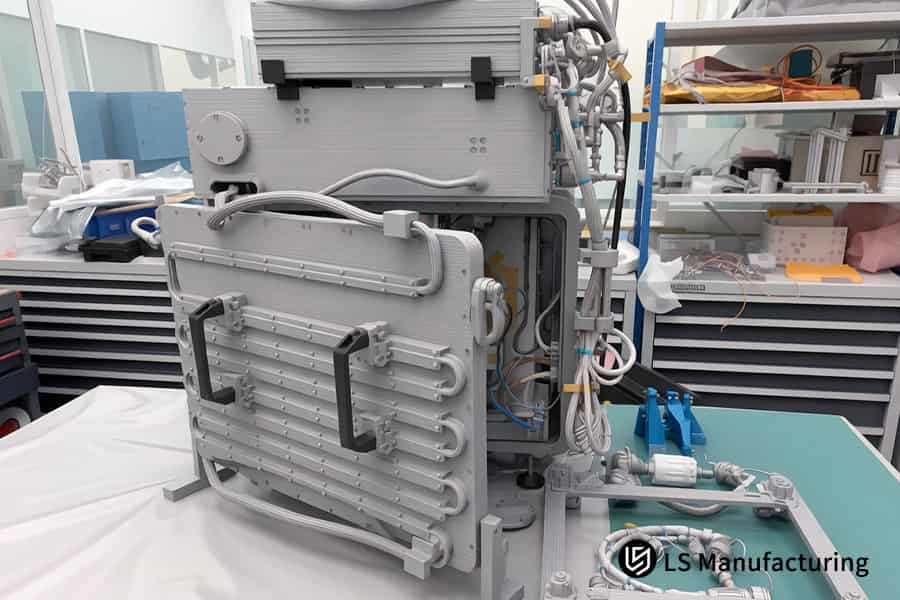
Figure 1: 3D printing constructs intricate custom equipment enclosures with integrated wiring channels.
Why Does Raw Material Thermal Recycling Dictate The Baseline 3D Printing Cost Per Gram In Precision Engineering?
Raw material thermal recycling technology determines the 3D printing cost per gram since it determines the amount of the raw material which needs to be used to maintain integrity of the printed part during laser powder bed fusion process. It is simply impossible to obtain a repeatable 3D printing part density of more than 99.5% without thermal recycling of powders:
Controlled Refresh Ratios Stabilize Your Production Economics
The material Ti-6Al-4V needs a blend of 30% virgin and 70% reconditioned powders, while the ratio of nickel superalloy is going to be 40:60. It will help avoid oxidation contamination and differences in batch structure. Thus, you will be able to perform an efficient 3D printing cost analysis procedure and estimate a proper budget for your continuous production without any unforeseen increases in cost because of the waste or necessity to use virgin powder only.
Thermal Gradient Management Prevents Hidden Defects
The thickness of the layers at 30–50 µm is characterized by incomplete melting of the powder. Therefore, if you use it regardless of restrictions (no more than three times), this will lead to the creation of pores below 99.5% and, as a consequence, the appearance of cracks due to cyclic loads. By controlling morphology of the particles online, you will avoid premature fatigue fractures and ensure required quality of precision B2B manufacturing.
Data-Driven Powder Lifecycle Enables Accurate Online Quotes
The cost of powder refreshment should be taken into account during your online 3D printing quote considering geometrical and thermal parameters. We correlate reuse cycle number, oxygen content, and mechanical properties that you expect from the powder in order to calculate the 3D printing material traceability. So, the quotation is not anymore an estimation but a precise calculation. In this case, you are able to make a comparative analysis of suppliers technically and not only financially.
Industrial raw materials management is a quantifiable metric for your manufacturing process. You will get total documentations on the history of powder batches, recycling, and densities in compliance with AS9100 and ISO 13485 standards. This all ensures that each gram manufactured fulfills fatigue life. New to powder thermal recycling in metal 3D printing? Access our free technical guide covering refresh ratios, oxygen control limits, and how to calculate accurate per-gram costs for Ti-6Al-4V and nickel superalloys.

How Can Advanced 3D Nesting On The Build Plate Minimize Your Custom 3D Printing Quote?
Optimization of 3D nesting on the build plate reduces your custom 3D printing quote automatically as a result of increasing the number of prints per session, thus spreading out the overhead fixed costs, such as costs incurred during pre-heating and inert gas use. The following are how optimization of nesting reduces your 3D printing service cost:
Packing Density Limits and the 22% Cost Drop
- Industry baseline: Packing density of processes such as MJF/SLS reaches its maximum value at 8%-12%.
- Algorithm lift: Using interlocking and rotating parts leads to an additional 4 percentage points of packing density.
- Your gain: This increase in spatial nesting efficiency reduces the effective price per component printed by more than 22% – lowering the cost of your 3D printing parts price.
Fixed Cost Dilution Lowers 3D printing cost per gram
- Energy example: Preheating an industrial SLS printer requires about 15 kWh per cycle; cost of purging with nitrogen is $0.08/L.
- Nesting impact: Increased packing density reduces the fixed cost per gram.
- Result: 3D printing manufacturer pricing become economic even for small batches of customized parts.
Algorithm-Driven Nesting Enables batch production optimization
- Software logic: Analyzes part geometry, thermal shrinkage, and minimum spacing (~2mm) for optimal layouts with no collisions.
- User action: Load STL files; get a build optimization plan automatically.
- Value: No need for trial and error, which means you'll get an instant, more accurate 3D printing supplier quote.
Transparent Savings Without Price Negotiation
- Flexible scheduling: Arrange your order according to our manufacturing process and obtain automatic increased packing density.
- Outcome: The quote demonstrates real savings because of the packing density and not a random discount, while maintaining quality and delivery times.
In this technical solution, the nest optimization becomes an obvious cost factor. Utilizing algorithms that are guaranteed to increase packing density by 4%, you will always be saving at least 22% per part. This will allow creating your custom 3D printing quote from real factory statistics.
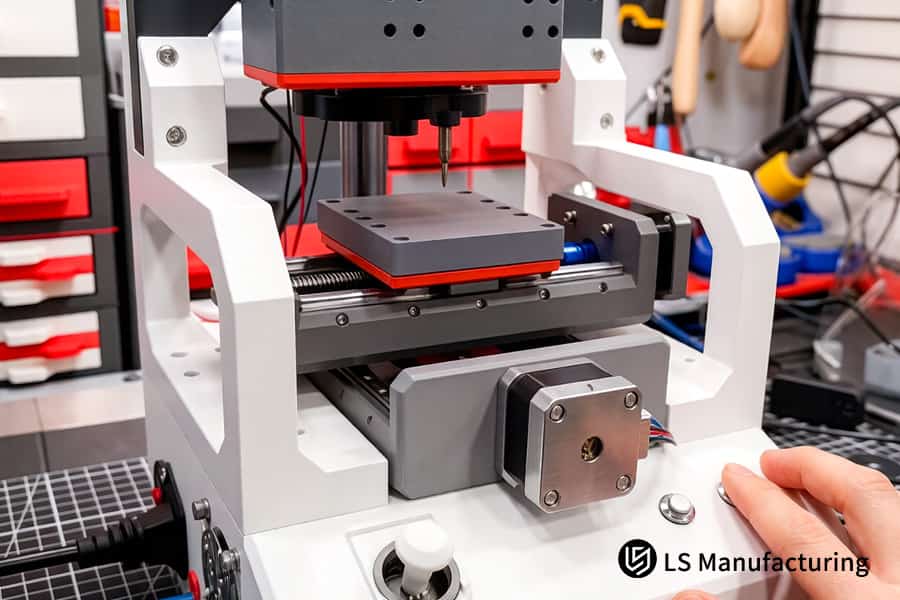
Figure 2: 3D printing manufactures microfluidic chip devices for biochemical analysis and laboratory research.
What Structural Boundary Parameters Ensure The Pricing Precision Of An Online 3D Printing Manufacturing Quote?
The structural boundary parameters will be the determining factor of whether your 3D printing manufacturing quote will be representing the actual cost of production or concealing hidden costs of post-processing. The compliance with correct design rules will prevent these hidden costs from happening through the quantification of the following three geometric parameters controlling scrap and rework costs: Powder Removal Difficulty Index, Overhang Angle, and Baseplate Stress Distortion. Let us take a look at how each of the parameters influences your accurate 3D printing quote:
| Parameter | Ignored in Quote | Properly Quantified | Cost Impact to You |
| Powder Removal Difficulty Index | All cavities drain free of obstructions | Time for cleaning is calculated depending on the hole diameter (<2mm – obstruction), channel length (>50 mm – obstructed powder) and internal curvature radius | Labor costs of 8-15 hours per complex part for manual powder removal are eliminated |
| Overhang Angle Threshold | Angles quoted according to 45° standard support angle | The weight of 3D printing support structure is dynamically scaled from 45° to 30°; 1% more weight per degree below 45° | 18-25% overquoting of unsupported features that never need such supports is avoided |
| Baseplate Stress Release Path | Flats within ±0.1mm are assumed after cutting | Residual stress vector is precalculated and cutting sequence optimized in order to achieve ±0.05mm flatness through 3D printing tolerance control | Saves 12% scrapped first article rate down to less than 2% for large thin-walled parts |
These structural boundary parameters convert ambiguous quoting assumptions into quantifiable engineering constraints. Using 3D printing cost estimation that considers powder removal, support weight, and stress relief prior to quoting results in costing that is accurate to production cost within ±3%. It solves for the common problem of budgeting 15-20% more due to lack of modeling geometry. The resulting geometric optimization structure ensures the quoted cost is guaranteed until the final inspection stage, without any hidden costs of powder traps, excessive supports, or warping of plates.
How Do Micron Level Dimensional Tolerance Specifications Alter The Total Precision 3D Printing Cost?
Micron-level dimensional tolerances directly govern your precision 3D printing cost because tightening a feature from ±0.1mm to ±0.005mm forces a measurable jump in post-processing hours. Every 0.01mm increase in precision will cost you an additional 0.3-0.5 mm in stock that needs to be removed with CNC machining. Furthermore, Ra 6-12 μm as-printed surface roughness should be entirely removed to reveal homogeneous surface. Below is the structured ladder of tolerance band vs additional post-processing time:
| Tolerance Band | As-Printed Surface Roughness (Ra) | Stock Allowance on Mating Faces | Post-Processing Workflow | Additional Machining Hours per Part (avg. 100 cm³ envelope) |
| ±0.1mm (Standard) | Ra 12μm | None | None – use as-built | 0 h |
| ±0.05mm (Refined) | Ra 8μm | 0.2mm | Single light milling pass on critical faces | 0.5 h |
| ±0.01mm (High Precision) | Ra 6μm | 0.3mm | 5-axis CNC rough + finish; 2 setups | 2.5 h |
| ±0.005mm (Ultra Precision) | Ra 6μm (same) | 0.5mm | 5-axis CNC with in-process probing; stress-relief anneal; 4+ setups | 5.0 h |
This ladder allows you to relax your tolerances on non-mating surfaces down to ±0.1mm and use your custom parts manufacturing cost on mating surfaces that really require it, thus reducing overall costs of the project by 35-50% in comparison with using tight tolerances everywhere. Utilizing the exact 0.3mm 3D printing machining time will avoid any unnecessary material while guaranteeing the cleanup one. This table can be used by you when negotiating with the design team about where each micron adds real value and where post processing finishing adds machining time.
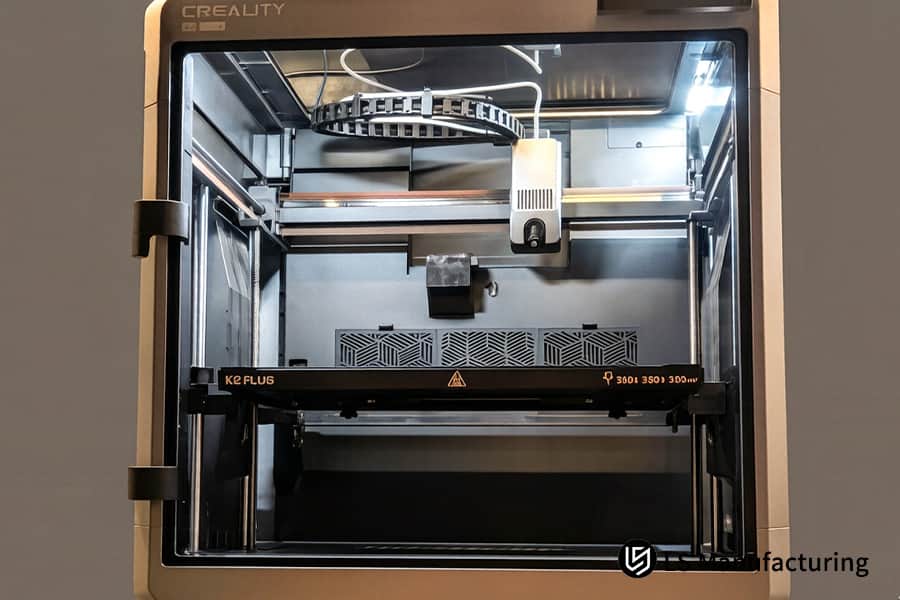
Figure 3: FDM 3D printing creates multi material prototypes for design validation and testing.
Why Does Geometric Orientation Design Drastically Sway A Specialized 3D Printing Service Quote During Slicing?
Geometric orientation during slicing determines your 3D printing service quote as every degree of a part inclination changes the level of staircasing effect and amount of support. The inclination of critical mating surfaces perpendicular to the laser scan will keep local roughness level between 3.2-6.3 μm while decreasing the unnecessary support weight by over 35%. Here is how orientation optimization can provide you with this leverage:
Surface Roughness Control via Staircase Effect Mitigation
Changing the angle of the inclined plane from 0° to 15° from the horizontal line decreases layer step from ~25 μm to ~8 μm with 30 μm of layer thickness. This results in roughness after printing in Ra 3.2-6.3 μm and eliminates the necessity for additional polishing of 80% of functional faces. Save 2-4 hours of manual work per piece in addition to improvement of 3D printing surface integrity without any negative effects on sealing or wear resistance.
Support Mass Reduction Through Strategic Rotation
Tilt of a downward oriented surface of 0° to 15° relative to horizontal decreases the step-height of layers from about 25μm to about 8μm in layer thickness of 30 μm. As a result, roughness of an as-printed piece enters the Ra 3.2–6.3 μm range, thus making polishing unnecessary for 80% of functional faces. Your slicing engineering design will automatically result in lower unit cost and higher 3D printing production speed.
Quote Accuracy Gains from Pre-Slice Optimization
Optimization of the orientation before creating paths is important in order to provide an online 3D printing quote with the correct volume of supports and surface finish required rather than taking into account the default worst-case scenario. The 45-degree rotation of a cylinder compared to the horizontal position leads to a price difference by 31% just due to the volume of supports. You get an accurate price quote according to real requirements, ensuring 3D printing cost transparency at any stage of purchase process.
This is the first step that provides assurance of surface finish and efficiency prior to the 3D printing process initiation. With progressive batch validation, 3D printing design decision are made faster due to immediate feedback about the strengths and weaknesses of specific orientations. You will always have surfaces finish Ra ≤6.3 μm and >35% less supports — this is additional money saved for you and your 3D printing service quote.
How Can Progressive Batch Validation Mitigate Procurement Risks For An Accurate 3D Printing Quote?
By replacing the single estimate with production data for different production amounts, progressive batch validation reduces procurement risk. The proportion of the fixed costs like laser warm-up time, filter replacement frequency, and printer cleaning time will get smaller and smaller as production amount changes from one piece to 100+ pieces and then to 500+ pieces. Here is how this staged approach secures your accurate 3D printing quote through 3D printing batch validation:
Fixed Cost Dilution Across Volume Tiers
- Laser warm-up: 12 min/run fixed; decreases from 12 min/pc (1 pc) to 0.12 min/pc (100 pcs).
- Filter replacement: $180 for 200 hours; 500 pcs per run decrease per-part cost by 90%.
- Machine cleaning: 30 min/per job fixed; decreases from $7.50/pc (1 pc) to $0.15/pc (500 pcs).
- Result: Your custom parts manufacturing cost reduces predictably as the batch size increases, including 3D printing NPI cost.
Validation Data Drives Quote Confidence
- First article (1 pc): Inspection and testing establish the quality standard.
- Pilot batch (100 pcs): SPC discovers variations and parameter tuning is performed before mass-production.
- Production batch (500+ pcs): Cpk stays at the level of 1.33 and more, meaning consistent quality.
- Benefit: This production scale transition ensures quote reflects actual conditions, mitigating 3D printing supply risk.
Zero MOQ Enables Risk-Free Ramp-Up
- Start with 1 piece: Pay only for single-piece validation.
- Scale to 100 pieces: Reduce costs by 40-55% in comparison with prototypes.
- Move to 500+ pieces: Close-to-mass-production economics for stock.
- Advantage: Supply chain validation happens incrementally; 3D printing MOQ flexibility lets you test before scaling.
This innovative validation process takes you from prototype to production with no initial MOQ requirement. Fixed costs are spread across higher volumes, enabling accurate part economics at each phase. Your accurate 3D printing quote develops from the single-part cost into a production-level price that is based on machine information.
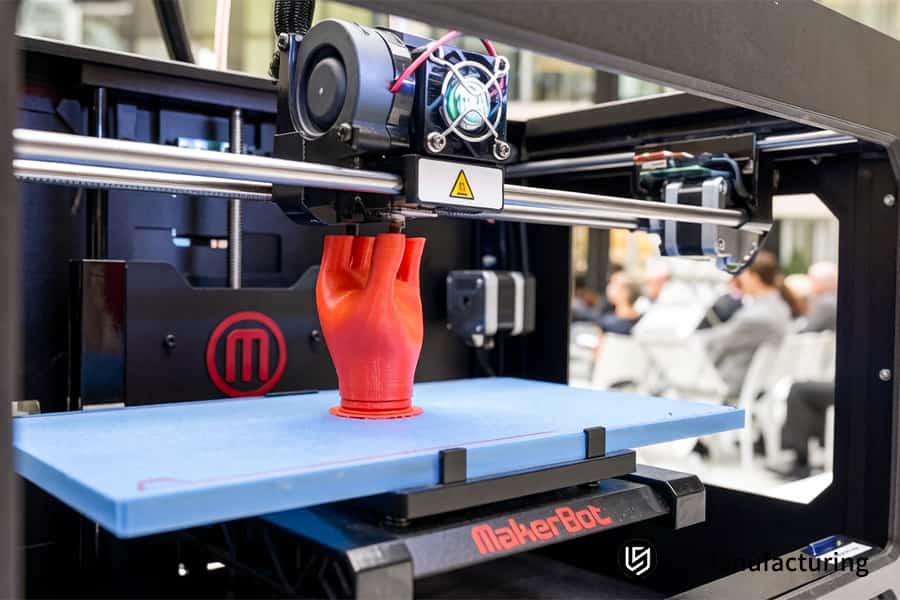
Figure 4: MakerBot 3D printing showcases a red hand prototype on a blue platform.
Case Study: How LS Manufacturing Reduced Critical Component Mass By 42% For An Aerospace Robotics Enterprise Via Customized SLM Technology?
Aerospace robotics original equipment manufacturer struggled with the following problem: their next generation gripper joint skeleton machined from billet metal using 5-axis CNC machining was characterized with 85% of material waste and weighed 320g – too much for the actuator torque and cutting down on flight endurance of the drone. The way LS Manufacturing used the SLM to solve the problem was as follows:
Client Challenge
Due to its complicated inner hollow structure, the conventional manufacturing process was not an option. Cutting tools did not have access to these interior cavities that were required for weight reduction, meaning the design had to remain at 320g. This high weight burdened the motors of the end-effector, lowering robot dynamics performance by 30% and limiting battery autonomy to less than 18 minutes per cycle. Our client wanted to have a sub-200g part but not at the expense of its stiffness. It became clear that 3D printing lattice core was the only way to go for internal weight reduction.
LS Manufacturing Solution
The design team undertook an in-depth DFM analysis along with topology optimization along with TPMS lattice structures. We then re-engineered the part in metal SLM using aerospace grade AlSi10Mg. As a countermeasure against stress caused by the rapid cooling process, we added a 580°C vacuum annealing step, which became a crucial step after seeing 0.08mm distortion in the initial test coupons without the annealing step. The lattice cores remained strong enough to bear loads. Specific 3D printing stress relief technique was designed for this thin-walled part.
Results and Value
The final part weight was reduced to 185.6g, which represents 42% weight reduction. There was no loss in tensile strength, which remained above 410 MPa, while the tolerances for critical bores were maintained at ±0.02mm. Per unit price custom 3D printing quote decreased by 30% as compared to machining. Lead time went down from 4 weeks to 6 days. This allowed our client to win a military contract and choose us as their strategic partner. 3D printing weight reduction resulted in improved mission life for their robotic vehicle.
This industrial additive case study proves that the application of advanced DFM technology like topology optimization, TPMS lattice, and 580°C stress-relief annealing allows resolving mass-constrained aerospace engineering problems not resolvable by conventional means. Your 3D printing cost per gram is a key tool in your hands when each gram saved increases mission time. For precision aerospace engineering, this case proves that using SLM with intelligent post-processing ensures weight reduction and mechanical properties qualification within one test cycle.
From 320g to 185.6g without sacrificing strength or tolerance. Need to shed mass from a critical component? Share your target weight and load requirements, and we’ll engineer an SLM-optimized solution.

Why Choosing LS Manufacturing As Your Certified Tier 1 3D printing Service Quote Manufacturer Secures Engineering ROI?
Choosing a certified Tier 1 manufacturer for your 3D printing service quote avoids the risks of unknown quality and protection of intellectual property associated with unapproved suppliers. With dual certifications of IATF 16949 and ISO 9001 standards, all deliveries include 100% CMM inspection reports, independent material chemistry analysis, and SPC/Cpk capability information. This is how your engineering ROI is secured:
Certified Quality Systems Eliminate Rework Risk
IATF 16949 certification ensures defect prevention as opposed to detection via annual surveillance audits. For you, this translates into consistent compliance such that every batch conforms to the same ±0.02mm tolerance without need for incoming inspections. The non-conformity rate is less than 0.3% compared to an industry norm of 2–5% for non-certified shops, which translates to protection of your schedule and warranties. 3D printing quality assurance ensures daily calibration of machines using the reference artifacts.
Full Traceability Delivers Audit-Ready Documentation
Every shipment comes with a digital package containing CMM inspection data for all critical features, OES/XRF for material composition certificate and quality control parameters for each production batch. This reduces the time required by your engineers in qualification of the output of a new supplier from 3-5 hours. In regulated industries like aerospace and medical devices, this document fulfills AS9100/FDA audit requirements for you. A 3D printing certification compliance checklist captures all inspection points based on your drawings.
Digital Asset Protection Secures Your Intellectual Property
The CAD Firewall System architecture ensures that your design data is isolated in an air-gapped server that can be accessed only by the assigned engineers under NDA. The logs of file access are kept for 7 years, and all the transfers are AES-256 encrypted. It ensures that your proprietary geometries remain within a protected environment – a necessity when you are sharing sensitive design data for online 3D printing quote creation for multiple projects. The automatic file expiration after 30 days of delivery ensures 3D printing data protection.
This certification-based system ensures that your V becomes an assured engineering result with documentation at each and every step. Daily machine calibration, compliance checklists per order, and data protection policies eliminate the costs associated with qualifying suppliers. Your online 3D printing quote from a IATF 16949 certified manufacturer ensures systems and quality control parameters of Cpk ≥1.33.
FAQs
1. What is the baseline industrial 3D printing cost per gram for standard engineering materials?
Weight-based industrial pricing depends on material properties and can be quoted online at prices ranging from $0.30 to $0.80 per gram for industrial standard PA12 nylon. On the other hand, high-end aerospace-grade Ti-6Al-4V titanium or PEEK, which experience substantial loss from thermal oxidation during recycling of powder, incur full production costs of $3.00 to $8.00 per gram.
2. How can I optimize my CAD design file to effectively minimize total weight without sacrificing structural rigidity?
It is possible to use efficient software in order to substitute solid internal areas with a 3D honeycomb or lattice structures (retaining a volume fraction between 15% and 30%) or optimizing wall thickness for shells that are not bearing any load within the recommended range of 1.5mm to 2.5mm.
3. Does your online estimation platform include complex post-processing operations in the 3D printing quote?
Yes. Our 3D printing digital quoting engine is totally transparent concerning manufacturing stages. Depending on tolerance and surface finish that you select online, the algorithm will calculate all necessary labor costs, such as annealing, removing supports, bead blasting, and precision finishing/polishing in order to reach certain Ra surface roughness level.
4. Why do tight tolerances of ±0.01mm exponentially increase the overall cost of precision 3D printing?
This is because whenever the dimensional specifications go beyond the physical limitations of the additive manufacturing process (usually ±0.1mm), additional material is required for post-sintering grinding and trimming. Apart from that, there should be an additional precision machining process where the component will be mounted onto a custom fixture and will undergo 5-axis high-speed CNC milling center operation.
5. What is the absolute minimum order quantity requirement for a custom 3D printing quote?
In order to properly support the technological innovations and rapid prototype development of global hardware research and design engineers, LS Manufacturing has established the official Minimum Order Quantity (MOQ) of a single unit for all custom precision components production.
6. How does LS Manufacturing protect confidential proprietary CAD files upon online document submission?
Prior to any uploading of your 3D CAD file to our online database system, you are free to sign a Non-Disclosure Agreement (NDA), having full international legal power. All data transmission occurs through the use of asymmetric encryption technology, providing 100% protection of your core intellectual property from the very beginning.
7. Can a clear financial matrix compare metal SLM manufacturing vs. conventional CNC machining costs?
Absolutely. As far as LS Manufacturing supply chain analysis methodology goes, in case when a particular part contains complex geometry and a "Buy-to-Fly" ratio (material scrap) during its machining exceeds 80%, then the implementation of metal additive SLM manufacturing technology will help you reduce costs associated with hard alloy tools and raw materials by about 40%.
8. How long must a procurement manager wait to receive an actionable, definitive, and accurate 3D printing quote?
As soon as you send us all the necessary information, including 3D model (STEP/IGS formats), lattice structure, chosen material and tolerances, through LS Manufacturing Customer Service Website, our highly professional DFM review team will send you a final technical proposal within one hour, which is legally binding.
Summary
It is crucial for keeping budgets low during NPI development to know 3D printing cost factors and apply DFMA from day one. Optimal tuning of material characteristics, nesting density, tolerances hierarchy, and build direction helps to avoid wastes and eliminate tooling costs. The 42% weight reduction achieved in manufacturing an aerospace robotic joint by LS Manufacturing shows how much return can be expected from high engineering and quality control.
Stop making generic calculations and stressing about budgets. Click “Request Quote/Submit Drawings” and upload your 3D CAD drawings to LS Manufacturing’s virtual manufacturing platform. Within an hour, our senior engineers and materials scientists will give you a complimentary DFMA report on manufacturability, wall thickness issues, stresses mitigation and weight savings.
📞Tel: +86 185 6675 9667
📧Email: info@lsrpf.com
🌐Website:https://lsrpf.com/
Disclaimer
The contents of this page are for informational purposes only.LS Manufacturing servicesThere are no representations or warranties, express or implied, as to the accuracy, completeness or validity of the information. It should not be inferred that a third-party supplier or manufacturer will provide performance parameters, geometric tolerances, specific design characteristics, material quality and type or workmanship through the LS Manufacturing network. It's the buyer's responsibility.Require partsquotation Identify specific requirements for these sections.Please contact us for more information.
LS Manufacturing Team
LS Manufacturing is an industry-leading company. Focus on custom manufacturing solutions. We have over 20 years of experience with over 5,000 customers, and we focus on high precisionCNC machining,Sheet metal manufacturing, 3D printing,Injection molding.Metal stamping,and other one-stop manufacturing services.
Our factory is equipped with over 100 state-of-the-art 5-axis machining centers, ISO 9001:2015 certified. We provide fast, efficient and high-quality manufacturing solutions to customers in more than 150 countries around the world. Whether it is small volume production or large-scale customization, we can meet your needs with the fastest delivery within 24 hours. choose LS Manufacturing. This means selection efficiency, quality and professionalism.
To learn more, visit our website:www.lsrpf.com