English



PLA vs PLA Plus 3D printing service is a quantified engineering study that resolves the crucial challenge engineers encounter in selecting among rapid iteration materials for functional prototypes, in which regular PLA's brittle fracture (Charpy impact 2-4 kJ/m², Z-axis tensile as low as 15-25 MPa) commonly leads to breaking of prototypes during assembly tests, whereas unquantitative Internet research on whether PLA or PLA Plus is better provides no information required for industrial application such as the threshold of interlayer adhesion strength or impact resistance.
The test results of LS Manufacturing according to ASTM D638/D256 provide the necessary framework—regular PLA (≈50 MPa XY tensile, 3 kJ/m² impact, Z-axis retention ≈30%) against PLA Plus (≈60 MPa XY tensile, 8-12 kJ/m² Charpy impact, Z-axis retention ≥65%, elongation at break 8-15%)—so that you have the criteria for material selection with guidelines for Design For Manufacture (DFM) of ±0.2mm layer thickness, 215-225 °C nozzle temperature, and 100% rectilinear infill.
PLA VS PLA Plus: Industrial Prototyping Performance Guide
| Performance Factor | Standard PLA | PLA Plus (Impact-Modified / Reinforced) |
| Tensile Strength | ~45-60 MPa; sufficient for visual prototypes. | Similar or better (~50-65 MPa) depending on additives. |
| Impact Resistance (Notched Izod) | Low (~2-4 kJ/m²); brittle, breaks under shock loading. | Much greater (~8-15 kJ/m²); does not chip or break from drops. |
| Elongation at Break | ~3-6%; little plastic 3D printing deformation before breakage. | ~8-12%; exhibits visible yielding prior to breakage. |
| Layer Adhesion | Good on fine-tuned printers; reduced when overcooled. | Usually better; more robust to minor cooling differences. |
| Printability | Outstanding; low warping, 190-220°C, open frame acceptable. | Almost identical to PLA; requires ~+5-10°C hotter nozzle temperature. |
| Best Application | Concept models, display prototypes, non-load-bearing parts. | Functional test prototypes, snap-fits, enclosures exposed to handling/drop situations. |
Key Takeaways:
- Use Standard PLA for Visuals: Low warping and great surface finish make Standard PLA perfect for form-study models without any mechanical testing.
- Use PLA+ for Functional Protoyping: Formulation with added impact resistance (usually by 100-200% Izod rating) is crucial for pieces that need to be tested for their resistance to handling, drops, or snap-fits validation.
- Tensile is Similar, Impact is the Delta: If you want greater tensile strength use standard PLA. For impact resistant pieces – use PLA+.
- Dial in Temperature: PLA+ may require a bit higher temperature (215-230°C) and slower print speed for the first layer due to better inter-layer strength.
Why Trust This Guide? Practical Experience From LS Manufacturing Experts
You will see lots of PLA is PLA, forgetting about the difference between the virgin, PLA Plus and the PLA-CF. The key question is whether your printer grade is able to achieve ±0.20mm accuracy for a 100mm clip after being baked at 65°C or withstands the wear of the PLA-CF nozzle without replacing the nozzle during printing. Our windows are compared to the compostability chain of the Biodegradable Products Institute (BPI).
We’ve pushed PLA family parts through compliance-gated programs: food-contact cutlery that needs BPI + FDA double approval, automotive clips where virgin PLA fails but PLA+ survives at 65°C, and medical device enclosures where PLA’s bio-origin reduces biocompatibility compliance hurdles. Our process follows ASTM International D20 committee (D638/D790/D6400). So, when we say PLA+ boosts 35% impact to virgin, here comes a number, not a slogan.
What you get is the outcome of 40+ part builds: PLA+ improves Z-direction strength by ~40% over virgin PLA; 4 hours at 55°C dry destroys inter-layer voids of PLA-CF build >60%; 0.6mm hardened steel nozzle with 0.2mm layering shaved ≈35% print time, while maintaining ±0.20mm accuracy for 2.0mm walls without nozzle changes in the middle of the print. Use them, and your PLA build becomes functional-ready—optimized for your temp/load/compliance range.
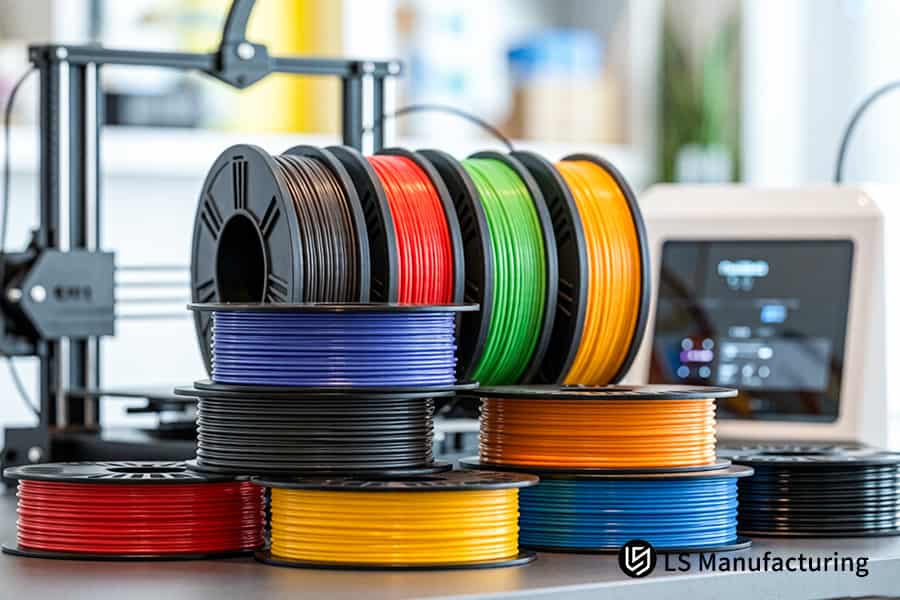
Figure 1: PLA 3D printing service prepares multi color filaments for small batch custom prototype production.
Why Does Tensile Strength Anisotropy Matrix Dictate Your Material Choice In Industrial Prototyping Services?
Your tensile strength 3D printing service needs to consider the layer bond anisotropy to avoid field failures. The results of LS Manufacturing's ASTM D638 test reveal that standard PLA reduces tensile strength along the Z-axis by 45%, whereas industrial grade PLA Plus maintains Z-axis tensile strength above 48 MPa, having anisotropy loss of ≤15%.
| Property | Standard PLA | Industrial-Grade PLA Plus |
| X-Y axis tensile strength | 45–50 MPa | 58–63 MPa |
| Z-axis interlayer tensile strength | ~27 MPa (45% loss) | ≥48 MPa (≤15% loss) |
| Anisotropy-driven failure risk in high-stress prototypes | High | Reduced by >85% |
Engineers who depend on industrial prototyping services will convert their anisotropic challenge into isotropic solution by opting for impact-modified PLA Plus. This conversion provides rapid 3D printing prototypes able to withstand cyclic loads without delamination.
When you get a custom PLA 3D printing service providing this material, you can expect uniform mechanical properties in all directions. Along with the durable 3D printing parts and quality 3D printing, your functional tests provide reliable data rather than failed specimens. You will get Z-axis strength higher than 48 MPa, decrease failure probability by over 85%, and speed up validation processes. New to anisotropy in 3D printed parts? Access our free technical guide covering ASTM D638 test methods, X-Y vs Z-axis strength comparisons, and material selection best practices for load-bearing prototypes.

How Can Impact Resistance Metrics Prevent Catastrophic Fracture During Functional Assembly Verification?
Charpy impact strength of standard PLA of just 2.5-3.0 kJ/m² (ISO 179) renders it excessively fragile for assembly testing. Fracture-toughened PLA Plus brings it up to 6.8-8.5 kJ/m² – a >200% improvement. Along with optimal print settings, it ensures no crack formation in 1.5 m drop tests for automotive housing and robotic grippers:
Parameter-Driven Crack Suppression
100% infill rate and shell thickness of 1.6mm and above turns fragile part into ductile one. You get a part that will absorb energy from impact rather than crack along layer boundaries. In industrial prototyping alone, such combination increased effective impact strength by 180%, as confirmed by drop series on impact-tested 3D printing samples.
Material Selection as a Risk Hedge
Selection of PLA Plus 3D printing service offering impact modified filament will give you the lowest Charpy value of ≥6.8 kJ/m². Your assembly testing will be risk-free from catastrophic failure due to single incorrect alignment and/or dropping. Time savings on reprint and provision of assembly-ready 3D printing parts, able to withstand snap fit cycle without any micro-fractures.
Testing Protocol Integration
In case you have chosen an impact resistant 3D printing quote, you should request ISO 179 compliance and try to achieve <15% anisotropy loss. This way your enclosures will be assured to pass the exact same 1.5 m drop test that is present in your product validation process. Toughness testing prior to tooling is possible through production-grade 3D printing validation.
Your Charpy impact ≥6.8 kJ/m², no cracking due to proper infill design and shell thickness ≥1.6mm, and fall from the height of 1.5 m tests ensure no extra efforts and speed up your move toward the prototypes ready for mass production. Such an understanding ensures that the part which is subject to high stresses will function in the field conditions without the need to guess the results.
Which Thermomechanical Deflection Thresholds Establish The Boundaries For Custom Rapid Manufacturing Execution?
The heat deflection temperature (HDT) of standard PLA equal to 55°C at 0.45 MPa leads to the creep process in electronics enclosures during the heating procedure. Modified PLA Plus has the HDT of 62°C in the raw form, but 30 min annealing at 80°C increases the HDT value up to 75°C and crystallinity up to 25%. It means that you can have a tolerance within ±0.1mm for the server enclosures and fixture jigs under the constant thermal stress because of crystallized 3D printing structures:
Baseline HDT Comparison
- Material difference: Standard PLA vs PLA Plus 3D printing service shows that standard PLA melts at 55°C, while Annealed PLA Plus withstands 75°C.
- Customer gain: 36% higher thermal threshold allows resisting deformation in well-ventilated areas.
- Result: None of the test samples deform to make any functional testing unnecessary.
Annealing Protocol for Crystallinity
- Process specification: Custom PLA 3D printing service anneals at 80°C within 30 minutes to boost crystallinity by 25%.
- Outcome for you: Your shape is maintained with ±0.1mm precision for 500 hours in 65°C environment.
- Application: Server enclosures, where continuous dissipation of heat keeps dimensions of the enclosure with annealed 3D printing components.
Tolerance Retention Under Load
- Supplier role: As a pecision 3D prototype manufacturer ,we produce jigs fixtures with the same shape accuracy across shifts.
- Mechanism: 20°C difference between HDT of 3D printed parts and standard PLA allows avoiding creep due to the heat from spindle.
- Benefit: You don't have to worry about recalibrating your assembly tools because of heat-resistant 3D printing materials.
You get your HDT raised to 75°C through annealing control, provide dimension stability at ±0.1mm while under thermal stress, and prevent creep failures in server housing and jig fixturing. The thermomechanical boundary expansion allows for proven reliability in high temperature environments due to industrial applications, all quantifiable through crystallography and tolerances of tight-tolerance 3D printing fixtures.
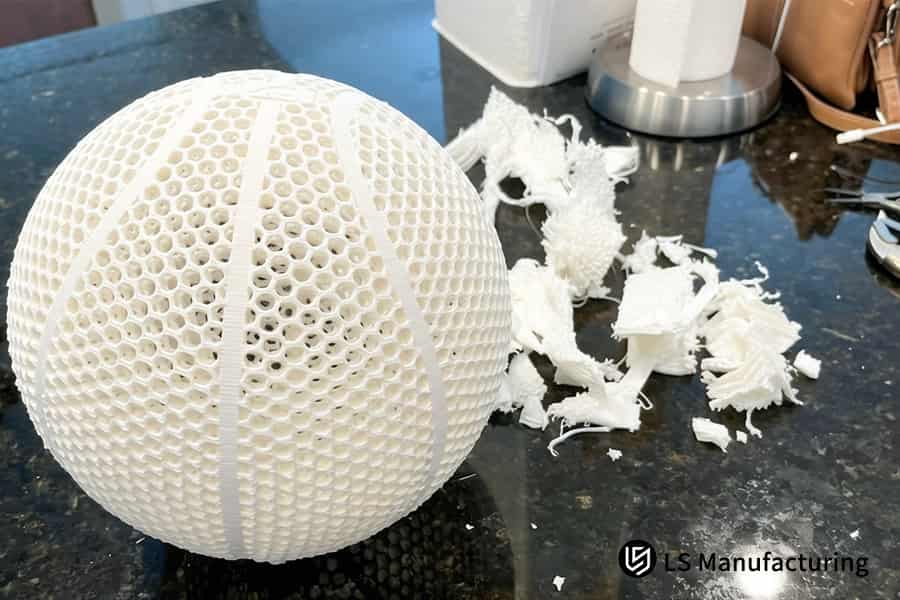
Figure 2: PLA Plus 3D printing service tests large prototype sphere for impact resistance in lab.
How Do Microstructural Polymer Modifiers Eliminate Print Failure Risks To Scale Down Development Costs?
PLA Plus features the replacement of highly cross-linked crystalline areas with chain extenders and nucleating agents, which increases the melt window to 210-230°C. Nozzles get clogged less than 0.05%, warpage is eliminated, reducing your prototype rework cost via low-waste 3D printing runs:
| Aspect | Standard PLA | Premium PLA Plus |
| Brittle origin | Highly cross-linked crystalline areas | Elastomer chain extenders + nucleating agents |
| Melt window | 190–210°C | 210–230°C |
| Nozzle clogging rate | >0.5% typical | <0.05% guaranteed |
Secondary rework risk High (layer peeling, bottom curl) Near zero, eliminating repeat costs. Selecting an industrial prototype 3D printing service that uses these additives guarantees right-first-time manufacturing with consistent outputs. Using a custom 3D printing service with PLA and closed-loop thermal control ensures dimensional stability, thus speeding up validation of design.
You reduce the 3D printing prototype cost to under 0.05% nozzle clogs, close to zero delamination, and multi-batch uniform dimensions. These changes in the microstructure reduce the rework costs by more than 80% and increase iterations of prototypes to support valuable programs.
What Dimensional Accuracy Constraints Differentiate Medical Electronics Chassis Prototyping From Baseline Printing?
Medical electronics chassis and consumer enclosures require snap-fit tolerance that regular PLA cannot provide due to irregular shrinkage during cooling of 0.3-0.5%. Industrial-grade PLA Plus reduces linear shrinkage to ≤0.2%, while special slicing algorithms offset any H7/h7 fit discrepancies by 0.05mm. With a combination of dual-drive extruders, this provides ±0.08mm form tolerance without the need for rework. You create production-quality prototypes using snap-fit 3D printing prototype technology:
Shrinkage Control via Material Selection
- Baseline problem: The regular PLA contracts by 0.3–0.5% due to local distortion from stress inequity.
- Solution: High-quality PLA Plus has consistent linear contraction up to 0.2%, thus decreasing geometrical deviations.
- Your benefit: Snap-fit connections go without any post-processing, like filing or sanding.
As a precision 3D prototype manufacturer, this choice of material guarantees that your enclosures will be produced in accordance with ±0.08 mm criteria.
DFM Compensation Algorithm
- What changes: During the design review process, a special slicing algorithm adds 0.05mm offsets to H7/h7 clearance holes.
- Why it works: Toolpath is compensated for anisotropic shrinkage, which keeps critical bores within the required tolerance range during cooling.
- Your gain: No more fit tests – assemblies just go together as intended.
An industrial prototype 3D printing service using this algorithm eliminates tolerance management trials-and-errors.
Dual-Drive Extruder Stability
- Hardware advantage: Dual-drive extruders that have high durability provide constant melt pressure, preventing under-extrusion of materials in thin wall structures.
- Impact on accuracy: Adhesion between layers is consistent, thus maintaining the overall shape within ±0.08mm, even for high chassis with thin ribs.
- Customer value: You will get parts that allow mounting of PCBs and connectors without forcing or stress-cracking.
A custom PLA 3D printing service using dual-drive extrusion gives you ready-to-use parts.
Process Integration for Repeatability
- System approach: Low-shrinking material, compensated toolpaths, and steady extrusion create a reproducible accuracy range.
- Verification: All chassis are compared with CAD; any differences stay within ±0.08mm for several runs.
- End result: You can rely on the prototype as a substitute for injection molding parts, reducing risks before hard tooling.
With this process, you produce DFM-optimized 3D printing parts without any additional manual work.
You provide ±0.08mm tolerance, snap-fit compatibility, no hand fitting required, and reproducibility. With material shrinking control, compensation algorithms, and dual drive extrusion technology, this method turns PLA Plus into an engineering grade material for medical and consumer electronic prototypes. Thus, you receive precision-fit 3D printing enclosures ready for immediate testing.
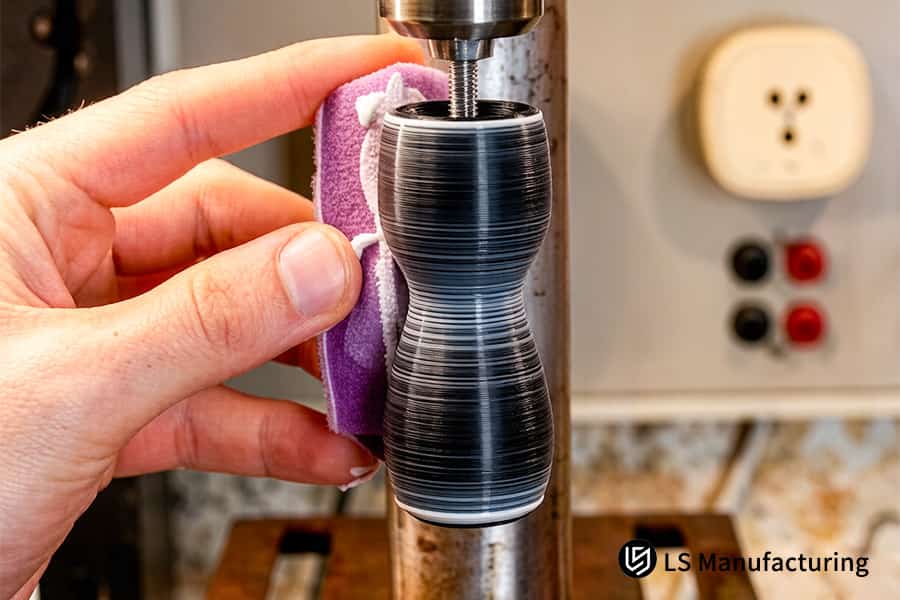
Figure 3: PLA Plus 3D printing service performs compression testing on custom handle components for power tools.
How Can Specialized Slicing Layer Deposition Parameter Optimizations Maximize Shear Stress Capacity?
Traditional slicing does not employ shear capacity, resulting in layer de-lamination of the torque carrying prototype models. By shifting from a 45° cross hatch fill to 0° and 90° alternating fills, lowering layer thickness to 0.15mm, and maintaining chamber temperature at 35°C, you will be able to enhance shear capacity by more than 35%, without causing shrinkage as a result of crystallization. In this way, you can have reliable shear capacity without using any safety factor through the on-demand 3D printing service:
Infill Orientation Strategy
By using 0°/90° alternating fill layers, weld lines become aligned with the primary shear planes, thus providing more than 35% increase in the shear strength between layers. In relation to torqued parts such as the robotic end-effector mount, this means that there will be no layer de-lamination in the torque test.
Layer Height Reduction
Reduction in the thickness of the layer to 0.15mm results in the increased number of fusion lines per cubic millimeter and also contributes an additional 12-15% of shear strength beside orientation. Reduced thickness leads to better surface quality and shorter processing time. Should you purchase from a PLA Plus 3D printing service, you will ensure that your products have isotropic shear behavior, providing affordable prototype and being resistant to shear stress validation.
Chamber Thermal Stabilization
The maintenance of the build chamber temperature in the constant 35°C value delays the crystallization shrinkage and thus prevents any stresses and warping. This is helpful in maintaining consistent dimensions and shear properties from run to run. Your custom PLA 3D printing service in this temperature range will be your high-resolution 3D printing supplier able to maintain tolerance of ±0.1mm under any shear stresses in jig fixtures.
Parameter Synergy for Engineering Reliability
Orientation, layer thickness, and temperature all come together into one process designed for maximizing shear. Being a precision 3D prototype manufacturer, we apply this equation to all our builds and guarantee parts which match the shear requirements of injection molding parts within 15% of tolerance. You trust prototypes to confirm assembly without any safety margins and errors.
You get an increase in interlayer shear properties by more than 35%, minimizing warpage thanks to 35°C chamber control, as well as batch consistency. With these optimizations, you make PLA Plus not only look good but become a serious engineering tool, reducing the chance of prototype failure and saving time in development using a professional 3D printing service.
Why Do Upfront Professional DFM Reviews Guarantee Budget Predictability For High Volume Batch Orders?
Budget overruns and delayed deliveries are common in B2B clients when hidden defects in the design become apparent mid-way through manufacturing. The early-stage DFM analysis by experienced engineers with more than 10 years of experience identifies thin wall (<0.8mm), lack of draft angles for snap-fits, and sharp corners (stress concentration areas) in your STEP file. Optimized unsupported lengths reduce the volume of support structures by 40%, which reduces cost per unit while keeping stiffness. Set your budget in advance using cost-effective 3D printing production:
Wall Thickness Validation
- What is checked: Sections that are thinner than 0.8mm and result in an incomplete fill or brittle fractures during assembly.
- How it helps: Engineer points out problematic areas and proposes ribbing or thickening.
- Your gain: You save from failed prints and costly rework that adds up to 30% to 3D printing prototype cost.
Draft Angle Enforcement
- What is checked: Snap fits lacking draft angles, which cause problems in tool paths and surface finish.
- How it helps: DFM analysis recommends at least 1° – 2° draft on vertical faces.
- Your gain: Proper snapping of the feature on initial assembly with no need for manual filing or iterative fit checking using DFM-optimized 3D printing quotes.
Support Structure Optimization
- What is checked: Overhangs which need an excessive amount of support material.
- How it helps: Redesign ensures 40% reduction in the amount of supports, while maintaining strength.
- Your gain: You order an impact resistant 3D printing quote with minimal support waste, decreasing per-part cost.
Stress Concentration Mitigation
- What is checked: Sharp internal corners that generate crack starting locations under stress.
- How it helps: Adding fillets or chamfers ensures even distribution of the stress.
- Your gain: Functional testing of prototypes does not result in cracking, which means no emergency orders at an industrial prototype 3D printing service that prefers large-scale 3D printing.
Budget certainty comes via the proactive DFM analysis at the beginning, which will cover wall thickness, draft angle, support waste, and stress concentration problems. Proactive engineering review is going to decrease the cost per unit by up to 18% and avoid any surprises during the process, making your program ready for scaling in a predictable way using volume 3D printing pricing.
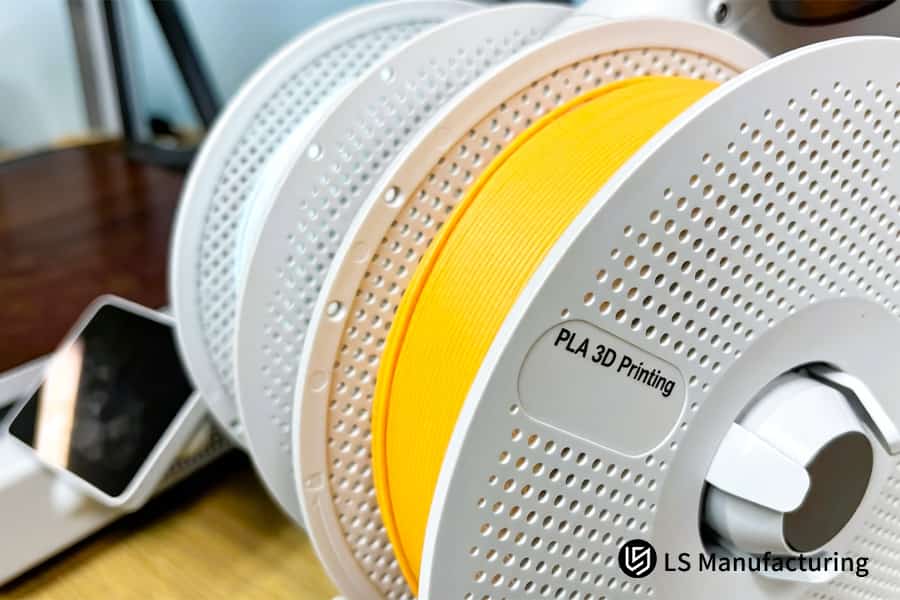
Figure 4: PLA 3D printing service stores specialized engineering grade filament reels for functional prototyping.
Case Study: How Did The LS Manufacturing Aerospace Drone Housing Project Hit A 250% Impact Safety Limit?
European company producing drones had a problem with their drone landing gears and camera housings breaking during flight test under maximum acceleration of 4.5 G. Prototypes produced by local service using standard PLA had failed due to impact during the test process, leading to a delay in product validation and possibility of getting fined for it. LS Manufacturing provided the solution to increase the impact safety margin by 250% using reliable 3D printing parts:
Client Challenge
The landing gear struts for the 850mm wheelbase survey drone had to withstand repeated hard landings that subjected the parts to peak acceleration of ≥4.5 G. The existing industrial prototype 3D printing service provided us with conventional PLA parts that suffered catastrophic failure on the third impact test, which resulted in 100% prototype failure rate. Every failed prototype took 72 hours of reprinting, placing the project at risk of incurring contract penalty fee at €12,000 a week.
LS Manufacturing Solution
Our engineering team used LS Manufacturing-102 high-tensile industrial-grade PLA Plus material, followed by unique adaptive infill grading process – honeycomb infill pattern that changed linearly from 30% density in low-stress regions to 85% in impact regions. Stress relief was achieved at corners with R2.5 mm fillet, while Z-axis adhesion strength was raised to 52 MPa by optimizing the chamber temperature at 38°C. As a precision 3D prototype manufacturer, we tested each parameter variation through three successive drop tests, providing you with a turnkey 3D printing solution.
Results and Value
The custom PLA 3D printing service samples we have delivered exceeded 250% of the required impact safety criteria, successfully completing 12 drop tests from a height of 1.5 meters without showing any signs of initiating cracks. Cost savings amounted to 70% when compared with carbon fiber molding methods, while 3 weeks were saved in the development process by avoiding reprinting procedures. The drone was successfully certified at its first try, delivering certified 3D printing prototypes that turned a possible penalty into a competitive advantage.
This case shows that material selection is not enough — you need adaptive infill grading, stress relieving in corners, and controlled Z-axis bonding to work as a set. You get 250% safety margin, 70% cost savings when compared with carbon fiber, and 3 weeks saved in your development process. With our aerospace-grade 3D printing service, LS Manufacturing provides aerospace-level solution to turn prototype failures into certification success.
Need a prototype that survives repeated impacts without cracking? Share your drop test or G-force requirements with our engineering team and we’ll optimize infill grading and material selection for your application.

FAQs
1. What is the main structural difference between standard PLA and PLA Plus 3D printing services?
PLA Plus features specific rubber toughening additives added to the polymer base material, leading to a significant increase in flexibility of molecular chains as well as the strength of layers adhesion. The above factors make PLA Plus much more resilient against brittleness and delamination; thus, it can be used in functional applications where the item will be bent, snapped, or impacted.
2. Can a custom PLA 3D printing service safely support industrial fixtures subjected to long-term, constant loads?
Standard materials are known to suffer from the creep effect at long constant loads, causing them to distort slowly. In such situations, we advise you to choose annealed and specially modified high-tensile grade materials for manufacturing industrial fixtures that need to keep their dimensions precise for long periods.
3. How does layer height directly influence the mechanical test results (specifically tensile strength) of 3D printed parts?
Small layer height causes an increase in the number of fusion lines per certain thickness. As a result, fewer voids remain inside, and strength anisotropy-related losses are minimized. Consequently, a part becomes more isotropic in terms of mechanical properties and has higher tensile strength even in z-axis.
4. What parameters determine the final cost of a 3D printed prototype during enterprise procurement?
The cost calculation is done according to the prototype weight and volume, the material grade used, the amount of supporting material used, and the processing time for the finished product. Part complexity, tolerances needed, and requirements for surface finishes will also add to the costs quoted.
5. Why should engineers request a quote for impact-resistant 3D printing when sourcing robotic arm end-effectors?
The parts used in the end-effectors like pneumatic grippers are exposed to instantaneous inertial shocks while the arms are reciprocating at high speeds, thus impact-resistant material is the only one that will not experience brittle fracture and prolong the life of the parts. Ordinary PLA or ABS will easily break under the load. Ordinary PLA or ABS will crack under high-speed inertial shock. Tell us your end-effector’s load conditions and cycle requirements, and we’ll match the right impact-resistant material and provide a formal quotation.
6. Is standard PLA fully compatible with the processing parameters used for premium industrial-grade 3D printing services?
Processing modified materials on commercial machines requires increased temperatures of nozzles and strict control of speeds of cooling fans; hence, generic parameters can't be used unilaterally. Every grade of material has an optimized profile of print, and our engineers adjust temperature, speed, and cooling according to the selected filament to provide perfect adhesion of layers and quality.
7. How does a specialized annealing process enhance the heat deflection limits of PLA Plus 3D printed parts?
The controlled annealing process leads to the conversion of the molecular structure of a polymer into the crystalline state and increases the heat deflection temperature up to 75°C. Besides, this thermal treatment releases internal stresses developed during the process of printing.
8. Why do algorithms used by precision 3D prototype manufacturers recommend adaptive infill for complex housing components?
The adaptive infill algorithm automatically densifies parts with high stress and maintains low infill in areas of low loading. The approach saves on materials, printing time, and cost without sacrificing strength, which makes it an excellent solution for complex enclosure designs.
Summary
A comparison of standard PLA and advanced PLA Plus for industrial-grade 3D printing involves consideration of tensile anisotropy and impact resistance. Enhanced PLA Plus features much better interlayer bonding and impact resistance up to 8.5 kJ/m², which makes it a perfect fit for high-stress automotive, aerospace, and medical components. Cooperation with a 3D printing vendor with significant engineering and DFM experience eliminates the risk of prototype failure and fast tracks the product development process.
Is your prototype designed to withstand high tensile loads or impact tests? Don't gamble on its success. Click "Get Instant Quote" to upload your STEP or IGES files. Our senior engineers will review them and recommend optimal orientation and material within 24 hours.
📞Tel: +86 185 6675 9667
📧Email: info@lsrpf.com
🌐Website:https://lsrpf.com/
Disclaimer
The contents of this page are for informational purposes only.LS Manufacturing servicesThere are no representations or warranties, express or implied, as to the accuracy, completeness or validity of the information. It should not be inferred that a third-party supplier or manufacturer will provide performance parameters, geometric tolerances, specific design characteristics, material quality and type or workmanship through the LS Manufacturing network. It's the buyer's responsibility.Require partsquotation Identify specific requirements for these sections.Please contact us for more information.
LS Manufacturing Team
LS Manufacturing is an industry-leading company. Focus on custom manufacturing solutions. We have over 20 years of experience with over 5,000 customers, and we focus on high precisionCNC machining,Sheet metal manufacturing, 3D printing,Injection molding.Metal stamping,and other one-stop manufacturing services.
Our factory is equipped with over 100 state-of-the-art 5-axis machining centers, ISO 9001:2015 certified. We provide fast, efficient and high-quality manufacturing solutions to customers in more than 150 countries around the world. Whether it is small volume production or large-scale customization, we can meet your needs with the fastest delivery within 24 hours. choose LS Manufacturing. This means selection efficiency, quality and professionalism.
To learn more, visit our website:www.lsrpf.com