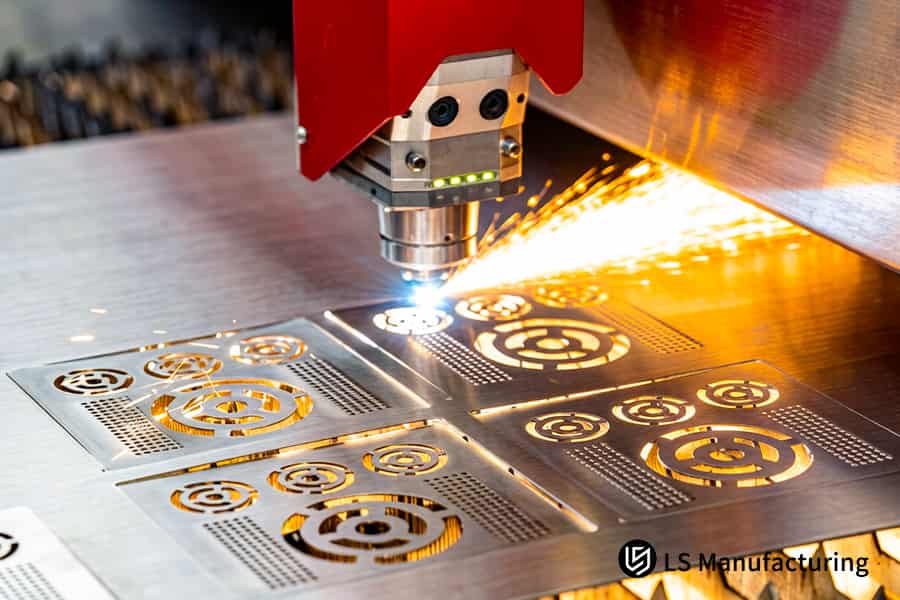
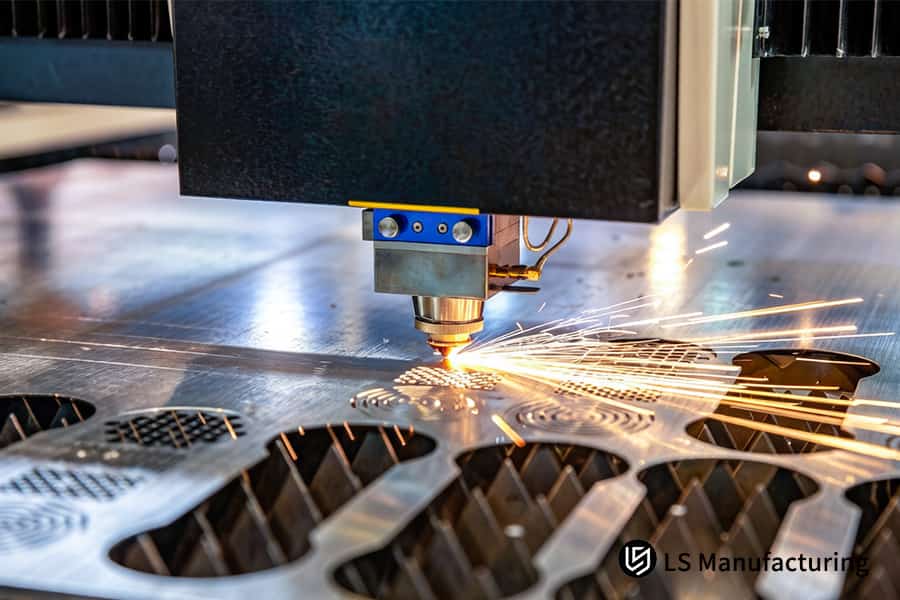
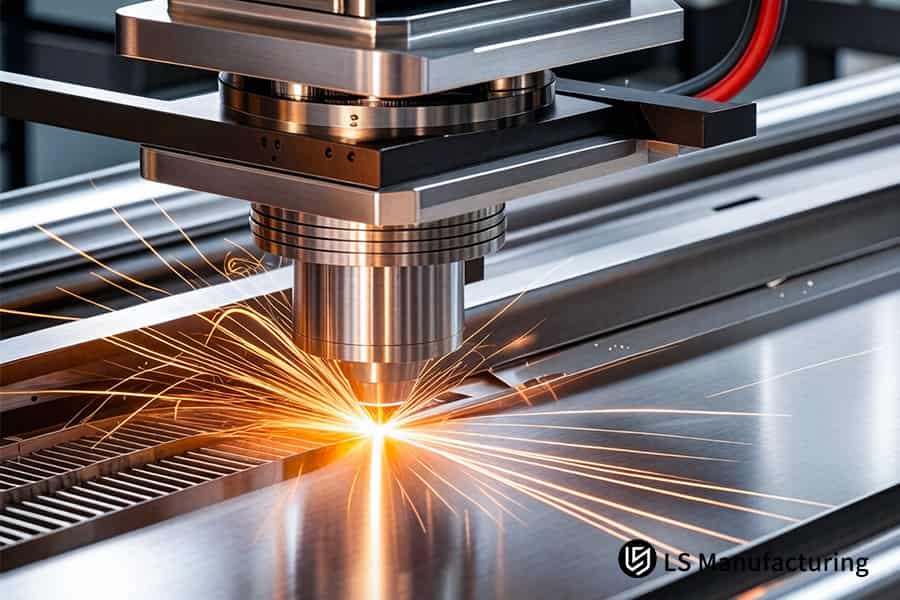
We apply advanced nesting software to your optimized laser cutting blanks, strategically arranging parts to achieve material utilization rates >85%, directly driving down your piece-part cost for cost optimization.
Integrated Traceability
We incorporate permanent, non-contact surface marking (e.g., laser engraving) on non-product contact surfaces during the integrated laser cutting process, facilitating part serialization and full batch traceability.
<块引用>
Our technological collaboration provides a proactive approach to overcoming the major issue of developing products that are hygienically clean, manufacturing-proof, and economically feasible. Our engineering laser cutting technology can turn your design concept into a tested and viable prototype. Our laser cutting DFM process helps avoid unnecessary revisions later on, eliminate wastage, and create a competitive product that performs well right from the start.
Case Study: LS Manufacturing Dairy Industry – Centrifuge Separator Bowl 316L Component Food Safe Laser Cutting Solution
For a global dairy separator manufacturer, there was an immediate need for a solution to overcome critical manufacturing challenges, including micro-dross (~0.1mm) and heat tinting, preventing effective operation due to poor hygienic validation. LS Manufacturing provided a food safe metal laser cutting solution through a pulse-cutting approach that addressed both issues and allowed for successful product development:
客户挑战
For the client’s high-speed centrifuge, more than 300 highly profiled 1.5mm316L dairy component were needed in the form of lamellae. The current vendor’s technology caused micro-dross (~0.1mm) and heat tint, resulting in variable lamination spacing beyond 5 μm. This led to imbalance and bacteria pockets, thus failing the 200-hour Clean-in-Place (CIP) test and bacteria challenge test, thereby preventing product certification and commercialization.
LS 制造解决方案
The LS Manufacturing started ahigh-precision sanitary cutting process that involved precise sanitation procedures. First, we ensured the presence of molybdenum in the 316L stock. Our major innovation came down to microsecond pulse laser cutting in addition to 99.999% pure nitrogen assisting gas. This procedure made it possible to reduce the area impacted by the cutting heat as well as prevented oxidation. After the lamellae were cut, they went through the process of magnetoabrasive finishing and electropolishing.
结果和价值
The components delivered met uniform edge surface roughness specifications of Ra 0.7μm ±0.1μm, which surpassed EHEDG cleanability requirements. The initial part inspection using CMM revealed a CpK >1.67 for all critical dimensions. The completed rotor successfully underwent the full range of CIP and microbiological testing in its first trial run. The validated laser cutting and finishing process helped our customer shave off 30% from the total manufacturing time of their components, thereby fast-tracking certification and market entry of their product.
<块引用>
In this instance, we have proven our ability to address intricate fabrication issues, including precision and hygiene. We provided a high-yield laser cutting and finishing method that yielded measurable geometry and hygiene benefits. Our technical collaboration helps our customers realize their design vision through reliable parts manufacture and guaranteed performance.
Pass rigorous bacterial challenge tests. Ensure your dairy components meet EHEDG standards with our food-grade laser cutting.
How To Evaluate A True Food Grade Laser Cutting Service Provider Beyond Machine Specifications?
Choosing a true partner involves assessing the quality management system rather than their machine list alone. Genuine competence in food grade laser cutting service provider evaluation can be characterized by documentation, quantifiable results, and risk prevention. The following is a comprehensive audit guideline that goes beyond equipment assessment, highlighting what a provider does systematically to maintain product integrity:
Scrutinize Technical Governance and Proactive Guidance
Assess the partner’s basic knowledge regarding sanitation requirements. An efficient partner is one who doesn’t only refer to 3-A and EHEDG; rather, he will show how those can be converted into practical engineering guidelines. The partner must offer you a compliant laser cutting DFM analysis that conforms to the requirements before manufacturing, making the requirements work for you through the auditable laser cutting process.
Demand Objective Evidence of Process Validation
Don’t just accept assurances, ask for proof. Ask for access to qualification information, such as surface roughness (Ra) data on various materials. An effective service supplier should be able to provide a library of qualified parameter data, with results that demonstrate reliable achievement of certain benchmarks. Such a laser cutting protocol demonstrates a controlled and repeatable process, which is the essence of a stringent sanitary manufacturing audit.
Inspect Post-Processing and Chain of Custody
Evaluate final processing, including cleaning and packaging. Determine their protocols for controlling the quality of their final rinse water and the packaging facility. Most importantly, determine if they have a quality documentation process, meaning do they have a complete traceability history from raw materials to final component. LS Manufacturing does just this, by providing a comprehensive sanitary laser cutting documentation report, where each component batch is connected to its raw material certificate and process documentation.
<块引用>
LS Manufacturing appreciates the level of scrutiny and resolves the client issue regarding the risks of supply chains through the implementation of compliance as an evidence-based system. We not only deliver parts but an entire documented process of validated food grade manufacturing. By doing this, we turn your procurement into a quality assurance process, giving you peace of mind and securing your product route in the regulated markets.
常见问题解答
1. What is the maximum thickness you can cut for food-grade 316L stainless steel with a clean edge?
We have high-power fiber laser machines available at LS Manufacturing that will cut food-grade 316L stainless steel with a maximum thickness of 25mm while maintaining cleanliness on the edges.
2. How quickly can I get a quote for my custom sanitary parts laser cutting project?
To obtain a quote for your project, please send us your STEP or DXF drawing along with the type of metal you require. Our response time, including process evaluation and quotation, does not exceed 4 business hours.
3. Can you achieve a mirror finish (Ra < 0.4 μm) on laser-cut parts without mechanical polishing?
是的。 Through the combination of our own "Bright Cutting" process with further electropolishing service, we can reach Ra surface roughness below 0.4 μm, which allows us to produce a mirror polished surface without any need for mechanical polishing.
4. What certifications does LS Manufacturing hold for food-grade metal processing?
We have achieved certification according to the ISO 9001 Quality Management System standard. In addition, our processes follow the principles of the 3-A Sanitary Standards and EHEDG guidelines to comply with the food industry standards.
5. Do you offer material certification and traceability for food-grade stainless steel?
是的。 For all food grade projects, we will be able to issue MTC for all metal that goes into our food projects.
6. How do you prevent cross-contamination when processing different food-grade and non-food-grade metals?
The processing of food-grade metals is separated from the processing of non-food grade metals physically, separately scheduled and processed using independent equipment and tools.
7. Can you provide additional services such as bending, welding, and polishing after laser cutting?
当然。 We offer comprehensive, turnkey manufacturing services—ranging from laser cutting, bending, and automated sanitary welding to electropolishing and passivation treatments—ensuring that quality is controlled and maintained throughout the entire production process.
8. What file formats and information do you require to provide the most accurate quotation?
Please provide 2D DXF/DWG or 3D STEP/IGES files that specify exact material thicknesses. Additionally, please indicate the material grade, quantity, critical tolerances, and surface finish requirements to enable us to conduct the most precise evaluation.
摘要
Selecting a professional provider of food-grade stainless steel laser cutting is not just outsourcing a process—it adds a strategic safeguard for your products’ hygienic safety and market compliance. LS Manufacturing transforms the abstract need for “food safety” into a measurable, verifiable manufacturing process, combining materials science, laser physics, and cleanroom protocols. We are not merely a parts supplier, but a technical partner that helps you navigate rigorous industry standards and audits.
Your hygienic equipment designs deserve world-class manufacturing. Whether prototyping or scaling for mass production, LS Manufacturing laser cutting experts in hygienic-grade fabrication are ready to assist. Click “Get a Quote” or contact us to submit your drawings. Within 24 hours, you’ll receive an exclusive “DFM & Hygienic Risk Analysis” report and an optimized quotation—let us define new standards of cleanliness and safety together.
Eliminate micro-slag and discoloration. Inquire about a food-safe laser cutting solution for 316L today.
本页内容仅供参考。 LS Manufacturing services 对于信息的准确性、完整性或有效性,不作任何明示或暗示的陈述或保证。不应推断第三方供应商或制造商将通过 LS Manufacturing 网络提供性能参数、几何公差、具体设计特征、材料质量和类型或工艺。这是买家的责任。 需要零件报价 确定这些部分的具体要求。请联系我们了解更多信息。
LS 制造团队
LS Manufacturing 是一家行业领先的公司。专注于定制制造解决方案。 We have over 20 years of experience with over 5,000 customers, and we focus on high precision CNC machining, Sheet metal manufacturing, 3D printing, Injection molding. Metal stamping,and other one-stop manufacturing services. Our factory is equipped with over 100 state-of-the-art 5-axis machining centers, ISO 9001:2015 certified.我们为全球150多个国家的客户提供快速、高效、高质量的制造解决方案。无论是小批量生产还是大规模定制,我们都能以最快的24小时内交货满足您的需求。选择LS制造。 This means selection efficiency, quality and professionalism. To learn more, visit our website:www.lsrpf.com.
 中文 (简体)