English



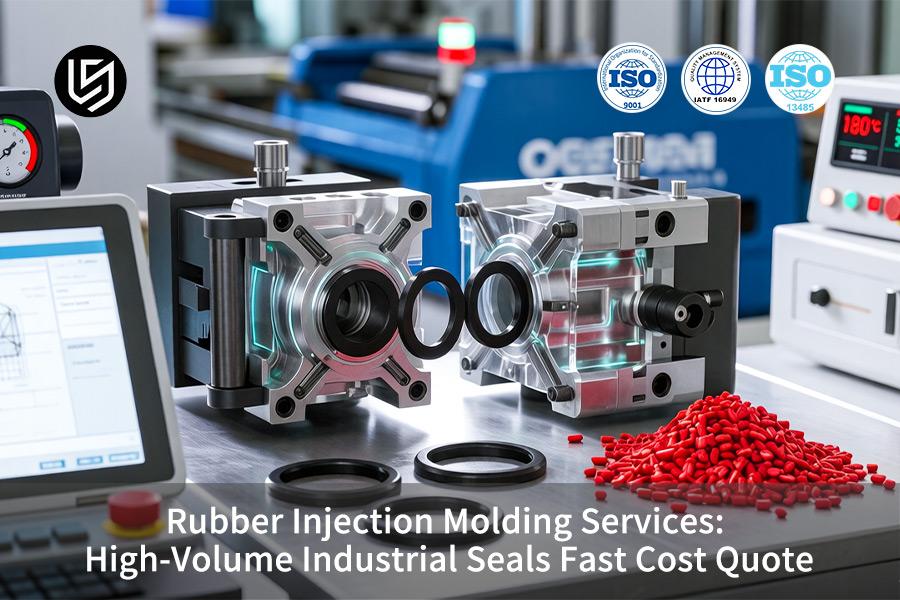
Rubber injection molding services have become critical for sourcing high-volume industrial seals, especially when a superficial understanding of what is rubber molding fails to identify latent manufacturing risks before they disrupt the supply chain. Inconsistencies in curing, flash exceeding 0.1mm, and delivery delays often stem from improper thermal management and poor DFM, driving scrap rates past 5%.
LS Manufacturing’s automated injection process directly resolves these vulnerabilities, ensuring flash remains under 0.05mm and delivering an accurate TPC cost estimate within 24 hours. Through ±1°C dynamic thermal management, we reduce scrap rates to less than 1% and compress lead times via upfront design validation. Review the following technical analysis to discover how to systematically optimize your raw material yield and cut down total part costs.
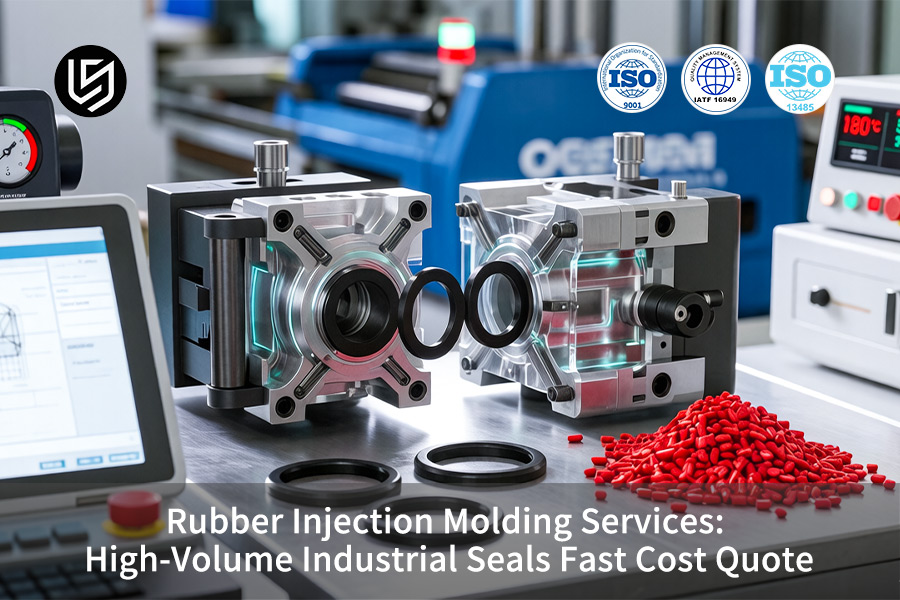
Rubber Injection Molding Services: High-Volume Seals Cost-Quote Guide
| Cost Factor | High-Volume Impact | Fast-Quote Driver |
| Tooling Investment | High up-front cost for multi-cavity injection molds made of steel. Distributed over millions of cycles. | Mold complexity (such as multiple cavities or undercuts) drives cost. |
| Cycle Time (Cure Time) | The key factor behind cost per part. Cure times can be anywhere between 30-90 seconds. | Part thickness (over 5mm leads to higher costs). |
| Material Volume | Materials cost usually comprises 20-40% of part cost. High significance when production is high volume. | 3D model provides instant material volume calculation; materials (EPDM, FKM, Silicone) determine base material price. |
| Flash & De-flashing | Deflash removal is a manual process with added labor cost. ITR tools make it unnecessary. | Higher cost (~15-30%) for ITR tools in mold cost but ~50% savings in part cost. |
| Our Quoting Model | Provide a detailed cost estimate with mold cost and piece price for high-volume production. | 3D drawing (STEP format) gives an immediate quote (within less than 24 hours); input parameters include material, volume per year, critical dimensions. |
Key Takeaways:
- Volume is Everything: Cost/unit falls exponentially as volumes go up; hence accurate annual forecasts are essential for the most competitive quote possible.
- Cure Time is Cost: The design of the component, especially its thickness, defines cure time, the biggest contributor to the cost per piece.
- Invest in the Right Tooling: If your volumes exceed 250k pieces, In-mold Trimming (ITR) tooling despite being more expensive at the beginning will save you the most overall.
- Specify to Save: Giving us your required injection molding material grade, exact dimensions tolerance (+/-0.1mm) and your environmental conditions is crucial for not having to do costly re-quotes.
Why Trust This Guide? Practical Experience From LS Manufacturing Experts
Generic articles about rubber molding are readily available for reading. But the present article is special in many ways. Firstly, this article is prepared by our manufacturing and quoting specialists who handle huge quantities of EPDM, FKM, and NBR every year. Secondly, our fast cost calculation system is based on the requirements laid out by the American Petroleum Institute (API).
We manufacture seals that require zero tolerance for errors – hydraulics rod seals for construction machinery, fuel resistant O-rings for aerospace applications, and aseptic gaskets for pharma-grade fluid processes. Our approach in validating such critical products is based on the guidelines used in the development and testing of fluid power systems according to National Fluid Power Association (NFPA) standards.
We know your manufacturing costs based on auditing and material yields. We know how to decrease curing time of FKM to reduce the cycle time by 20%, how to design molds for flashless parts at wall thickness of 0.3mm, and which compounds to use to meet NORSOK M-710 standards but at a 15% lower cost. Our experience-driven knowledge will help you get an accurate quotation promptly without over-engineering, scrap, and expensive replacement of seals.
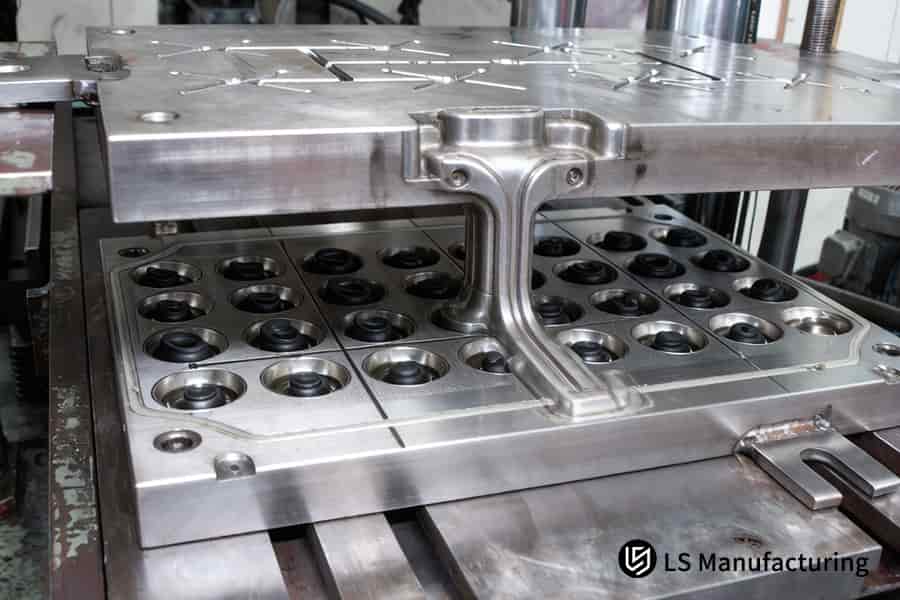
Figure 1: Molten silicone fills 32 polished cavities in the metal mold to create precision gaskets every 45 seconds.
Why Do Conventional Rubber Molding Methods Fail To Meet Zero Defect Standards For High Volume Industrial Seals?
Traditional rubber molding finds difficulty achieving a zero-defective production in high volumes because of varying vulcanization. This report describes the way through which thermal and pressure controls, particularly multi-stage injection molding pressure control, address the issue of variability associated with traditional molding processes:
The Core Challenge: Inconsistent Vulcanization in Mass Production
When producing large quantities above 100,000 units, small temperature differences of ±5°C between cavities can lead to great variations in cross-link density. Such inconsistencies are dormant and only come into play after long service life as brittle fractures or set failures of rubber seals in their end applications. As a reputable rubber seal manufacturer, we seek to address this underlying problem through 100% batch consistency rather than sampling.
Achieving Cavity-to-Cavity Thermal Uniformity
Standard platens generate thermal gradients. Our system utilizes individual heating elements per cavity to maintain the same heat history at 200°C ±1.0°C. This is essential when working with high volume industrial seals since it allows equal curing of each component and removes the major cause of variability in the batch's performance. Our process uses a closed-loop injection molding system for perfect control.
Eliminating Micro-Voids with High-Vacuum Injection
Air pockets and volatiles lead to micro-defects becoming the initial points of failure. Our system operates using high-vacuum injection molding performed in a sealed cavity with a high vacuum level below 5 mbar. It allows the removal of all gases prior to rubber insertion, creating a completely dense preform with no porosity, which is necessary for ensuring 99.8% cure rate.
Dynamic Pressure Control for Perfect Form Fill
Constant injection pressure cannot compensate for material viscosity changes during cure. Our system adjusts pressure in real-time based on cavity sensors. A high initial pressure ensures complete cavity fill, followed by precisely ramped packing pressures to compensate for thermal shrinkage, guaranteeing dimensional accuracy. This direct process control is central to our injection molding validation protocol.
In this technical analysis, the criteria necessary for ensuring zero defects in production include thermal management on a cavity level, high vacuuming during production, and pressure management. The document presents an ultimate guide for engineers that focuses on mastering process parameters to ensure no potential field failures occur – this represents the fundamental aspect of our custom rubber injection molding services.

How Can Custom Rubber Injection Molding Optimize Material Yield And Eliminate Flash For Critical Sealing Applications?
The challenge faced by engineers in maximizing the performance of seals is one of ensuring efficient production processes in terms of costs and waste. Below, we explore how custom rubber injection molding optimizes materials yield and eliminates the need for flash in production:
Maximizing Material Yield with Cold Runner Systems
- Core Methodology: Utilization of a separate temperature-controlled runner system per project.
- Technical Execution: Temperature insulation is used to keep the runner manifold apart from the heated mold cavity so that the material remains in a soft form between cycles for reuse.
- Direct Outcome: This cold-runner injection molding technique ensures less than 2% scrap from sprues and runners, which directly helps in improving the rubber molding price and efficient use of the raw material.
Eliminating Flash via Micron-Level Precision
- Precision Tooling: Use of high-quality tool steels and CNC/jig grinding to obtain high precision in aligning parting lines.
- Quantifiable Standard: Important shut off areas are precisely machined with a tolerance level of ≤0.01mm and prevent any rubber leakage.
- Process Result: The above method makes possible the achievement of flash-free injection molding technology with net-shaped seals that do not need deflashing and hence save labor charges.
Holistic Process Design for Total Cost
- Integrated Analysis: Understanding part cost as consisting of material, time taken per cycle, and secondary operations.
- Concurrent Optimization: Smart selection of gates and vents to ensure perfect fill without applying much injection pressure; something essential for precision injection molding.
- Commercial Value: With a combination of near-zero material wastage and flash-free molding, the lowest cost becomes inevitable; something which defines an efficient OEM rubber molding service.
The present analysis offers a detailed roadmap to attaining cost efficiency using engineering innovations rather than cost reduction by lowering prices. It proves that savings occur when certain processes are put into play: special cold runner technology to save material, micron tolerance tooling to eliminate flashes, and design-for-manufacturing to optimize the design. This marks the quantifiable value proposition of a company’s dedication to net-shape injection molding.
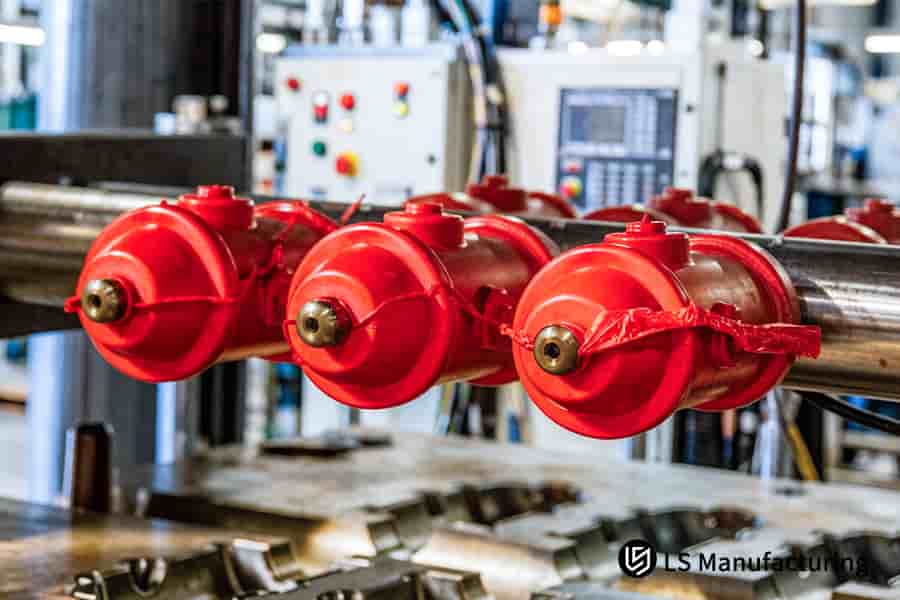
Figure 2: High-volume injection molding produces multiple red rubber seals on metal rods for automotive assemblies.
What Parameters Must An OEM Rubber Molding Service Master To Ensure High Precision Rubber Seals Dimensions?
To be precise with dimensions up to ±0.05mm and thus assure flawless leak-proof performance, an OEM rubber molding service must meet a rigorous set of requirements related to process parameters. The following analysis outlines key process parameters which a manufacturer needs to control to ensure the proper dimensions and quality of high precision rubber seals.
| Control Parameter | Primary Objective | Method & Technical Specification | Direct Impact on Seal Dimensions |
| Injection Pressure Control | Ensure that cavities are filled completely and without stresses. | Pressure is regulated in stages with closed loop control of 150-180 MPa. | Avoiding short shots and ensuring constant material density in high-pressure injection molding. |
| Mold Clamping Force | Confronts injection pressure to close the tool. | Tonnage depends on the area of the part (200-500 tons). | Ensures no flashing or deflection and maintains the net cavity volume. |
| Material Rheology & Cure Kinetics | Predictable flow behavior and even vulcanization. | Batch scorch time (ts2) regulated within ±2 seconds (MDR). | Regulates shrinkage rate and final cross-link density, an essential variable in predictive injection molding. |
| Thermal Management of the Mold | Even thermal environment across the mold. | Individual regulation of cavities within ±1.0 °C from the set value. | Avoids non-uniform curing and shrinkage and ensures process-stable injection molding. |
| Tooling Design & Maintenance | Provision of a perfectly shaped and stable cavity. | Sufficient shut-off clearance of ≤0.01 mm using high-grade steels. | Defines the physical limit of precision, enabling high-tolerance injection molding capabilities. |
Achieving proficiency in all five dependent variables results in predictable repeatability in relation to this tight tolerance. Through this approach, a concrete decision criterion can be established, because uniform dimensions are the result of a measured, controlled procedure, rather than just testing.
For designers and engineers, collaborating with a custom rubber molding supplier who has control over this complex system of variables is essential to achieving mass production of critical seals. Not sure which rubber grade fits your fluid dynamics? [Download our 2026 Rubber Compounds Compatibility Blueprint]
Why Is A 24 Hour Fast Cost Quote Rubber Molding Process The Ultimate Predictor Of Your Project Delivery Speed?
Long-lasting quotation processes cause uncertainties in terms of project deadlines and lead times in rubber parts procurement. A fast cost quote is much more than just a quotation in terms of pricing – it’s an indicator of the whole project timeframe and its feasibility. The following paragraphs will reveal how a fast cost quote rubber molding process ensures a successful product launch process.
Integrated Technical-Commercial Analysis from Day One
Once we have received the 3D file (STEP/IGS), we will proceed with the simultaneous technical evaluation. Our system automatically conducts the preliminary feasibility studies, after which our lead tooling engineer conducts a thorough DFMA study on the part design. This early engineering involvement enables us to ascertain important considerations, such as having even wall thickness (preferred 1.5-5.0mm) and enough draft angles (≥1.5°), and ensures that the industrial rubber seal quote is not only valid but can be fulfilled without any future complications.
Quantifying Risk to Define Timeline Certainty
This 24-hour quote is not just about figures. As noted above, the DFM will identify problems, like insufficient vents or difficult undercuts, that could jeopardize the timeline during the trial and sampling of the mold. With this information in hand, we can establish an unmovable mold production timeline within 15-20 days. The clear, concise, and reliable timeline established during the quotation stage is one of the advantages of choosing an experienced rubber injection molding factory.
From Quote to Production: The Seamless Handoff
Rapid quotation results in actionable project launch pack. This comprises the finalized CAD mark up, the process plan for production-ready injection molding, and a set deadline. This is because everyone involved will be on board right at the start of the review; hence, there won't be a need for another 1-2 weeks for the re-quote and clarification rounds.
Driving Efficiency with Data-Driven Process Control
In terms of setting optimal gate placement, filling procedures, and curing cycles throughout the quotation process, we incorporate all of these standards in our automated injection molding machines. We can ensure that the first parts that come out of the machine meet specifications, which cuts down time on sample revisions.
In essence, the 24-hour engineering quote acts as a guide that shows the way forward for the whole project. Weeks of doubt regarding cost, feasibility, and schedules are now resolved with one action plan that allows you to get your rubber molding fast quote. It is this engineering-oriented, problem-solving-first attitude that makes it possible for us to consistently reduce project lifecycles by at least 35%. And this fast cost quote rubber molding results in quick product entry into the market.
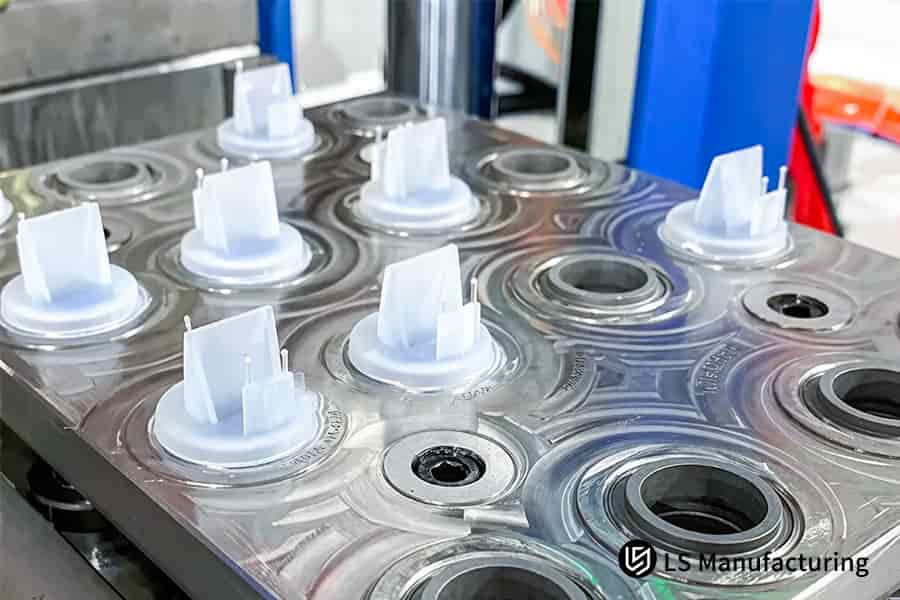
Figure 3: Heated nozzles inject neoprene at 150°C into steel cavities to form seals for automotive fluid lines.
LS Manufacturing Case Study: How An Automotive Supplier Secured 1,000,000 Custom High Precision Rubber Seals With Zero Leakage?
An international Tier-1 automotive supplier found itself with the task of manufacturing one million FKM (fluorocarbon) gaskets for their newly designed EV battery pack with zero defects required. The following case study explains how LS Manufacturing managed to solve the recurring issue of leaking using engineering skills to secure the massive order of custom rubber injection molding:
Client Challenge
The client needed 1,000,000 seals for a high precision rubber seals application ranging from temperatures of -40°C to 220°C at Shore A 70±5 hardness. The existing process used by the client had a problem in venting of the molds which resulted in porosity on a microscopic scale and a field failure of 800 parts per million. At this level of defect rates, the client was subjected to stoppage fines which could affect the schedule of the project and thus necessitate a completely different production strategy.
LS Manufacturing Solution
This solution was aimed at addressing the issue from its source by tackling both aspects of the problem. Initial flow simulations predicted gassing at the standard gate; our tooling team immediately rerouted the vents. Firstly, we used a high vacuum injection molding machine, where we vacuumed the mold cavity to -0.095 MPa prior to the injection to avoid any entrapped air. Secondly, we made use of the Sodick press, capable of micro-dosing injection molding, which guaranteed unsurpassed shot weight precision of ±0.1g. By combining these zero-defect injection molding approaches, we achieved full filling and density of the cavity, thus eliminating all tiny voids and leaks.
Results and Value
The process optimization went into round-the-clock operations for pilot manufacturing of the product. After 300,000 pieces had been produced, the products were 100% examined with Automated Optical Inspection (AOI) and showed the presence of flash of ≤0.03mm and importantly, a 0 PPM rate of leakages. It allowed us to reduce costs on secondary testing and repairment by 30%. Moreover, it was followed by certification of our plant as a core rubber seal manufacturer.
For this case study, one will have to go above conventional approaches when attempting to address automotive injection molding failures at elite level. The use of problem diagnosis and coupled technical solution enabled LS Manufacturing to provide quantifiable and proven reliability, which resulted in turning a highly demanding specification of their client into a reliably produced one.
To ensure zero leakage for 1M seals, demand a vacuum-molding validation. Submit your seal design for a 0-PPM process audit to lock in your volume production.

Which Performance Compounds Should You Specify When Requesting An Industrial Rubber Seal Quote For Extreme Environments?
In processes such as silicone injection molding, both cost and performance of a seal depend on the selection of its base compound. An incorrect compound selection is likely to result in failure in the field. Here is a comprehensive comparison of four important compounds that you should consider for your industrial rubber seal quote.
| Property / Compound | Nitrile (NBR) | EPDM | Fluorocarbon (FKM) | Silicone (VMQ) |
| Oil/Fuel Resistance | Excellent | Poor | Outstanding | Fair to Good |
| Temperature Range | -40°C to +120°C | -50°C to +150°C | -20°C to +220°C | -60°C to +230°C |
| Tensile Strength | Good (≥15 MPa) | Good (12-18 MPa) | Good (≥10 MPa) | Moderate (5-10 MPa) |
| Primary Cost Driver | Lowest cost option | Moderate, for weathering | Highest, for chemicals/heat | High, for temp flexibility |
| Best Application Fit | General oil & fuel systems | Cooling & outdoor systems | Aggressive fluids, suited for precision injection molding | Extreme thermal/static applications |
| Key Selection Insight | Cost-effective for most oil apps | Default for hot water & steam | Necessary for extreme duty cycles | Unmatched thermal range, used in medical-grade injection molding |
A good optimization will take into account the extremes of the environment specifications in conjunction with the end price of the part. Our engineers design custom rubber molding based on your requirements to avoid the 200 percent plus increase in price that comes with overengineering. This is how our application-driven injection molding guarantees performance and optimal rubber molding service price.
How Does LS Manufacturing Safeguard Your Intellectual Property And Mold Assets During Custom Rubber Injection Molding Production?
When outsourcing custom rubber injection molding, the level of trust is much higher than when dealing with any other aspect of business due to the protection of the IP and durability of capital tooling. This document contains detailed information about what LS Manufacturing does in order to guarantee IP security and longevity of mold assets.
A Protocol-Driven Framework for IP Security
- Formalized Onboarding: Each project commences with a jointly signed, location-dependent NDA prior to any information exchange.
- Controlled Data Handling: Your client 3D models (STEP, IGES) are securely housed within our isolated servers protected by advanced encryption and a rigorous permission structure, setting the foundation for a secure injection molding partnership.
- Auditable Access Logs: All accesses to your proprietary geometry will be recorded, ensuring that you keep full track of all movements and maintaining your trade secrets when utilizing OEM rubber molding service.
Proactive, Data-Led Mold Asset Preservation
- Beyond Reactive Repair: Our approach goes beyond simple repairs and focuses on planned preservation, seeing your mold as a valuable asset.
- Predictive Maintenance Triggers: A regular inspection and refurbishment process kicks in every time your mold completes 500,000 cycles.
- Preventive Refurbishment Actions: These involve the replacement of worn parts (seals, bushings) and repolishing of cavities according to initial requirements, representing an essential element of asset-protected injection molding.
Embedded Security in the Production Workflow
- Restricted Physical Access: The production cells working on your private projects are situated in restricted access zones where molds are securely housed in a special rack when not actively used.
- Process Parameter Security: Your part’s optimized injection molding parameters are stored encrypted in your machine’s controller, thus prohibiting any replication or process variance.
- Output Verification & Traceability: Part auditing and lot monitoring will be conducted by LS Manufacturing without keeping your original CAD design, thus providing you with a confidential injection molding process.
The structure presented above shows how security and longevity are by design, not by accident. Through the enforcement of digital protocols, mold protection, and the creation of stable manufacturing environments, LS Manufacturing offers the necessary level of security for you to develop a sustainable partnership. With us as a rubber seal manufacturer, you will be able to secure the value of your design as well as that of your manufacturing capabilities.
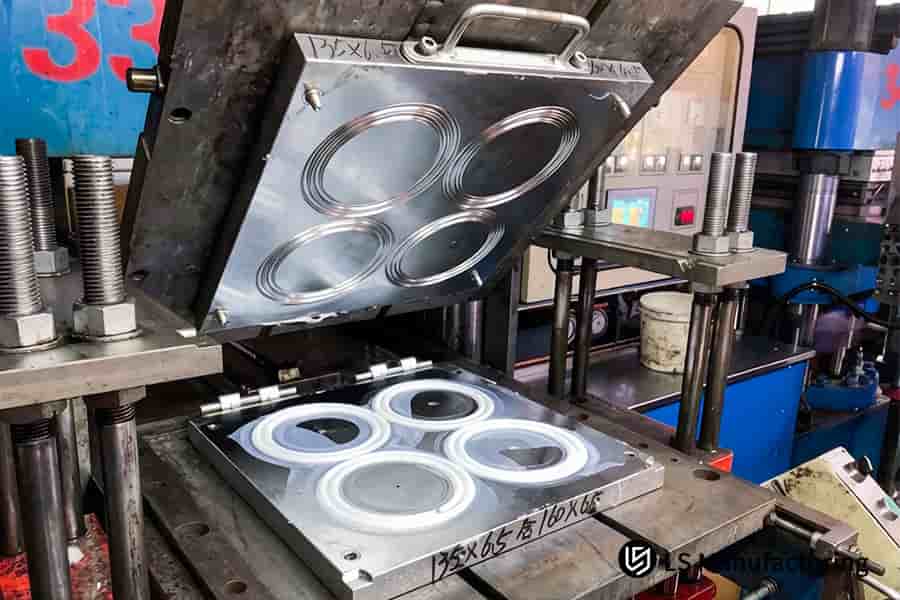
Figure 4: Rubber injection molding services compress white silicone rubber into circular seals for industrial machinery.
What Critical Parameters Should You Audit Before Finalizing A Long Term Contract With A Rubber Seal Manufacturer?
The choice of an injection molding supplier over the long term entails going further than mere unit cost quotations to confirm quality control based on facts and systems. An audit before any contract is signed is vital to mitigate risks and guarantee consistent production of high volume industrial seals. The following is a technical guide highlighting the most important factors to consider during the assessment process:
Validate Real-Time Statistical Process Control (SPC)
Check for SPC charts tracking the critical parameters of the cure temperature and injection pressure on the shop floor. Make sure that there is documentary evidence showing that the Cpk for the critical dimensions of the seals being produced is at least 1.33, as this ensures process stability. This forms the basis of an auditable process injection molding system.
Scrutinize Material Compliance and Traceability
Require current, test-specific certificates of conformity for all relevant standards (RoHS, REACH, FDA). Verify a robust material traceability system that links raw compound batch numbers to finished production lots. This ensures every component from a compliance-driven injection molding service meets your regulatory and performance specifications without exception.
Assess Advanced Production Part Approval
Review completed First Article Inspection Reports (FAIR) and Production Part Approval Process (PPAP) Level 3 documentation from past projects. These documents validate that the rubber seal manufacturer has a systematic protocol for qualifying mass production against all design records before shipment, a hallmark of a mature validation-ready injection molding operation.
This structured audit framework transforms vendor selection into objective capability verification. By demanding evidence of real-time SPC (Cpk ≥1.33), verified material compliance, and advanced PPAP protocols, you identify partners equipped for zero-defect production. Implementing this due diligence is the definitive step in securing a rubber injection molding services partner that mitigates long-term supply chain risk.
FAQs
1. What is the standard lead time for custom rubber injection molding tooling and production samples?
For standard, high-volume industrial seals, LS Manufacturing’s precision hard-steel mold design and machining process requires 15–20 business days. Once the mold debugging is complete, we will schedule a trial run within 24 hours and ship the initial T1 samples—which meet a tolerance of ±0.05mm—via SF Express or DHL for your testing.
2. Can you mold rubber injection components with metal or plastic inserts for overmolding applications?
Yes, LS Manufacturing specializes in insert molding or overmolding. Utilizing vertical injection molding machines paired with precise mold cavity locating pins, we achieve the seamless, integrated bonding of rigid materials—such as brass, stainless steel, or PPS plastic—with NBR or EPDM rubber, yielding a peel strength of ≥3.5 N/mm.
3. What is the minimum order quantity (MOQ) for high-volume industrial seal production runs?
To ensure stable mold thermal equilibrium and the efficient operation of our fully automated injection molding lines, we typically recommend a minimum order quantity (MOQ) ranging from 5,000 to 10,000 units for custom industrial seals. For high-value, precision components made from specialized fluorocarbon rubber (FKM), the minimum order quantity can be flexibly adjusted based on the project's projected annual usage.
4. How do you guarantee consistent hardness levels across a single batch of 100,000 custom rubber seals?
We control the curing consistency of the rubber compound by analyzing rheometer curves for every incoming batch of raw material. Furthermore, during the injection process, we implement intelligent mold temperature control with a precision of ±1°C. This ensures that the hardness variation across the entire batch of 100,000 seals remains strictly within a tolerance of ±3 Shore A, thereby completely eliminating issues related to localized over-curing or under-curing.
5. What surface finish standards can you achieve for dynamic sealing interfaces to prevent leakage?
LS Manufacturing employs mirror-finish EDM and polishing processes for its mold cavities. This allows us to achieve exceptionally high surface roughness standards—ranging from Ra 0.2μm down to Ra 0.05μm—on finished rubber seals. This significantly reduces dynamic friction resistance, ensuring 100% leak-free performance during the operation of high-pressure hydraulic cylinders.
6. How can I submit files to receive a fast cost quote and rubber molding estimate for my project?
Simply use the online inquiry portal on our website or send an email to our official address. Upload your 3D drawings (we support STEP, IGS, and X_T formats) and specify your required rubber material, hardness, and estimated annual purchase volume. LS Manufacturing’s engineering team will provide you with a comprehensive quotation—including DFM (Design for Manufacturability) recommendations—within 24 hours.
7. Do you provide standard material certifications and 100% quality inspection reports with every delivery?
Yes, we ship every order accompanied by a Certificate of Analysis (COA) from the raw material manufacturer, RoHS/REACH environmental compliance reports issued by SGS, and a full dimensional inspection report based on our Six Sigma quality control processes. For critical sealing surfaces, we also offer a "Zero-Defect" factory certification based on 100% Automated Optical Inspection (AOI) screening.
8. How does rubber injection molding compare to compression molding in terms of unit cost for large orders?
Although the upfront tooling costs for injection molding are approximately 30–50% higher than those for traditional compression molding, the process offers significant advantages. Its molding cycle is drastically reduced from 10 minutes down to just 60–90 seconds, and it eliminates the need for manual trimming. Consequently, for orders exceeding 20,000 units, the unit processing cost can be reduced by over 40%, making it the ideal choice for high-efficiency, mass production environments.
Summary
In industrial seal mass production, flawless quality, precise tolerance control, and mold lifecycle protection are essential to prevent fluid leakage. LS Manufacturing’s automated rubber injection molding holds ±0.05mm tolerances with flash ≤0.05mm, while cutting material costs 15–25% through cold-runner engineering. We are a long-term core partner providing upfront engineering assessments and easing supply-chain burdens from the design stage.
Ready to end flash, delays, and leakage in your supply chain? Don’t gamble on low-price suppliers. Click “Get a Precise Quote & Free DFM Assessment” to upload your STEP/IGS files and material hardness specs. Within 24 hours, our senior engineers will send a personalized response with pricing, tooling breakdown, scheduling, and design-for-molding advice—securing your project with verified engineering data.
📞Tel: +86 185 6675 9667
📧Email: info@lsrpf.com
🌐Website: https://lsrpf.com/
Disclaimer
The contents of this page are for informational purposes only. LS Manufacturing services There are no representations or warranties, express or implied, as to the accuracy, completeness or validity of the information. It should not be inferred that a third-party supplier or manufacturer will provide performance parameters, geometric tolerances, specific design characteristics, material quality and type or workmanship through the LS Manufacturing network. It's the buyer's responsibility. Require parts quotation Identify specific requirements for these sections.Please contact us for more information.
LS Manufacturing Team
LS Manufacturing is an industry-leading company. Focus on custom manufacturing solutions. We have over 20 years of experience with over 5,000 customers, and we focus on high precision CNC machining, Sheet metal manufacturing, 3D printing, Injection molding. Metal stamping,and other one-stop manufacturing services.
Our factory is equipped with over 100 state-of-the-art 5-axis machining centers, ISO 9001:2015 certified. We provide fast, efficient and high-quality manufacturing solutions to customers in more than 150 countries around the world. Whether it is small volume production or large-scale customization, we can meet your needs with the fastest delivery within 24 hours. choose LS Manufacturing. This means selection efficiency, quality and professionalism.
To learn more, visit our website:www.lsrpf.com