English



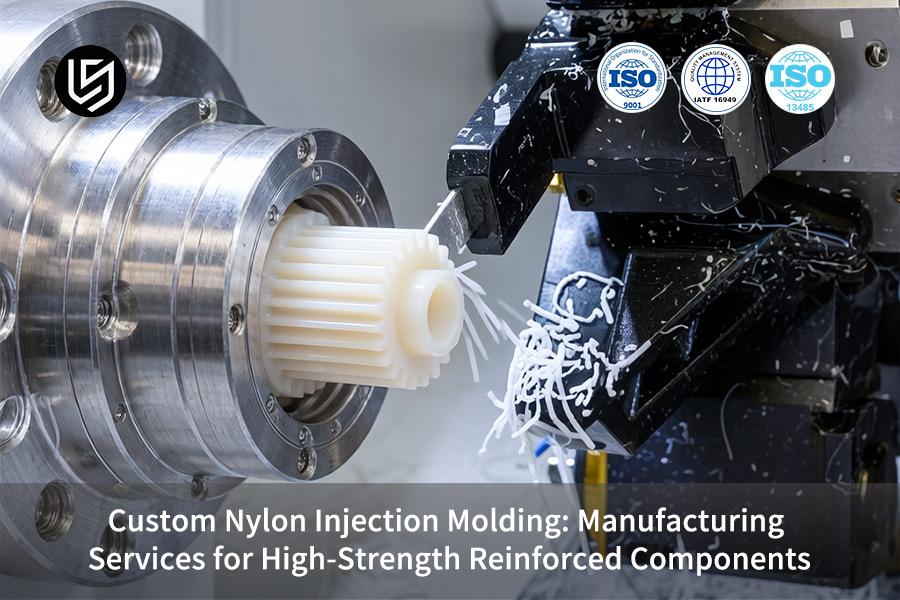
Custom nylon injection molding services by LS Manufacturing provide reinforced parts designed to prevent structural warpage and internal stresses. Using temperature control on the mold and injection pressure profiles ensures tolerances of ±0.02mm are achieved, effectively substituting die-cast metal for automotive and other applications. This technology helps procurement engineers achieve a reduction in part weight of up to 40%.
The table below outlines the specifications of our Senior Engineering Director on how to achieve maximum performance of high-strength nylon using optimized gates, mold shrinkage factors, and moisture conditioning processes.
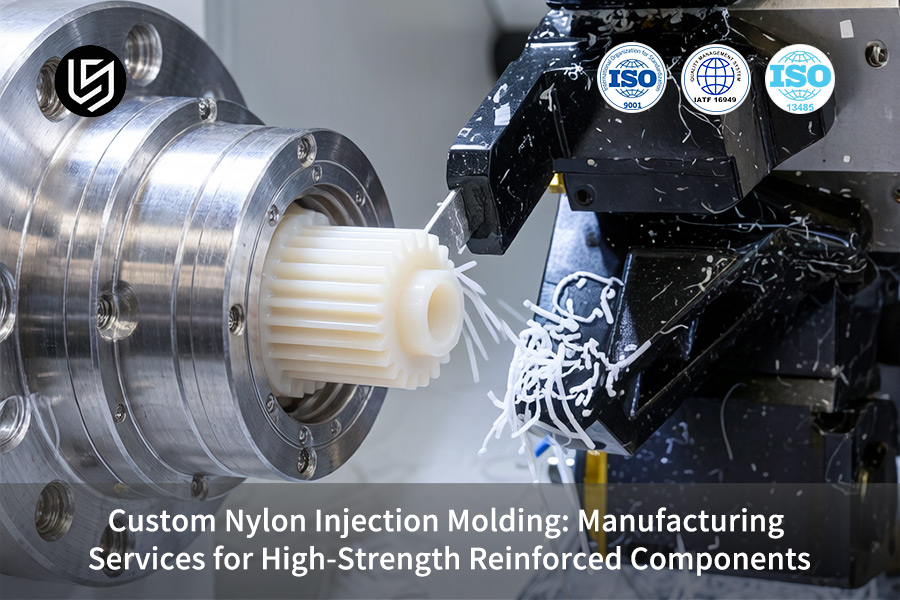
Custom Nylon Injection Molding: High-Strength Components Guide
| Technical Focus | Engineering Solution | Performance Outcome |
| Moisture Control | Pre-conditioning drying to <0.2%. | Preserves strength and resists hydrolysis. |
| Abrasion Management | Utilization of bimetallic barrels and hard screws for fiber-filled grades. | Simulation of mold flow along with even cooling. |
| Dimensional Stability | Ensures machinery is not compromised and dispersion of fillers in end products is uniform. | Maintains part flatness to within ±0.1mm. |
| Fiber Orientation | Strategic gate design to align fibers along primary stress paths. | Maximizes tensile/flexural strength, optimizing the strength-to-weight ratio. |
| Process Temperature | High mold temperatures (80-120°C) for proper crystallization. | Ensures optimal chemical resistance, wear properties, and dimensional stability. |
| Result: Engineered Component | A process tailored for reinforced nylons (PA6, PA66, PA12). | Delivers reliable, high-strength nylon injection molding parts for automotive, industrial, and consumer applications. |
Key Takeaways:
- Dryness is Non-Negotiable: For nylon to retain its mechanical characteristics, processing should be done under a moisture level of less than 0.2%.
- Equipment Must be Specialized: Regular molds and barrels cannot handle this material because reinforced nylons require wear-resistant components.
- Simulation Prevents Warpage: A mold flow analysis is necessary to account for the differential shrinkage characteristic of reinforced nylons.
- Process Enables Performance: Temperature and filling control during processing are vital to fully exploit the material’s engineering capabilities.
Why Trust This Guide? Practical Experience From LS Manufacturing Experts
There are many datasheets available on nylon processing techniques. What makes this guide unique is that it’s created by our staff with years of experience in producing glass and carbon reinforced compounds. We strictly adhere to the Society of Plastics Engineers (SPE) guidelines in order to maintain practical relevance.
The parts we manufacture are key components such as under-hood connectors, surgical tools, and propellers for drones. The performance of these parts in the extreme conditions of thermal and mechanical cycling cannot be compromised. For this reason, our material selection is not based on just data sheets but relies on the stringent testing procedures that SAE International recommends.
Through decades of experience in processing thousands of tons of plastic material, we have gathered a wealth of knowledge about the exact conditions required for optimal results such as preventing hydrolysis in PA66, preventing fiber orientation in 40% glass-filled plastics, and maintaining a Class A surface finish in structural parts. We bring you this practical knowledge, so that your design specifications can include only the best materials and the most robust parts.
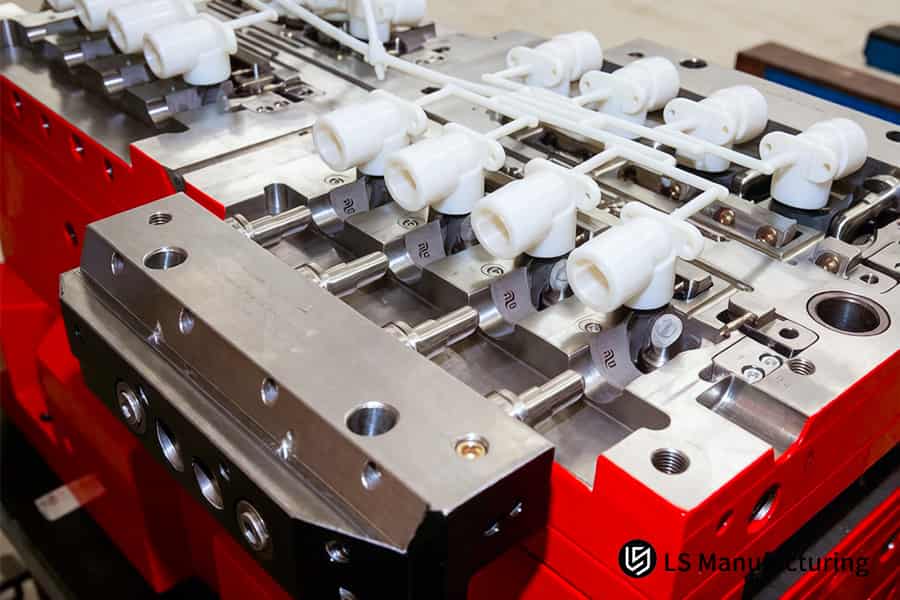
Figure 1: Precision nylon injection molding ejects white tubular parts from a multi-cavity steel mold for fluid systems.
Why Do Structural Components Require Custom Nylon Injection Molding Services Instead Of Standard Pure Polymers
The typical version of pure nylon can never be used in construction because of performance deterioration; its tensile strength is reduced by 30%-40% in case of moisture and creep is experienced above 60°C. The answer lies in using custom nylon injection molding services, which turn this unpredictable polymer into the stable material that can endure the conditions of exploitation. This procedure is a true technical way of avoiding structural catastrophe:
Engineering Out Moisture-Induced Property Decay
Solving the problem of hydrolysis involves a basic change in composition of the material. By accurately combining with 30%-50% of glass fibers, we are able to create a hydrophobic matrix with fibers preventing penetration of water into the material. The technique is essential for our high strength nylon injection molding process because it allows us to overcome the natural >30% reduction in strength in pure nylon.
Conquering Thermal Creep for High-Temperature Stability
For preventing creep under thermal loads, we don’t simply add fillers but design the crystallinity and fiber-matrix interface of the composite material. This process enhances the HDT to greater than 200°C and improves the flexural modulus to above 8,000 MPa. Such properties ensure stiffness even under constant exposure to heat, which is an accomplishment made possible through precision structural nylon molding for products such as automotive hood undercomponents.
Precision Processing to Lock in Engineered Performance
The true potential of any modified polymer material is fully harnessed via proper processing methods. In our nylon 6/6 injection molding service, our screws and temperature control processes are designed for retaining glass fibers at their original length. It is absolutely necessary in ensuring that the desired properties can be delivered by the product part.
Through this analysis, it becomes clear that structural reliability must be designed, rather than simply being an innate feature. By addressing the quantified failures of pure nylon through proper material science integration and process controls, our custom nylon injection molding services offer a guaranteed performing solution out of a basic polymer, converting it into a reliable nylon molding services solution devoid of field failure concerns.
How To Choose The Optimal Glass Reinforced Nylon Molding Material Blends To Prevent Engineering Failures
Select PA66-GF30 for linear thermal creep resistance, and deploy a 280°C–310°C melt temperature protocol to secure uniform fiber dispersion. Selection of the appropriate glass reinforced nylon molding material blend is a crucial task for engineers, as incorrect blending or process can result in direct failure of the part when stressed. What follows is a practical approach to matching material blends to particular stress regimes and controlling the molding process so as to ensure reliability. The key concept behind this approach is that:
A Framework for Material Selection
- Analyze Load Type & Direction: Identify the main types of loading (tension, bending, impact), as well as their orientation relative to the part.
- Match Blend to Load Case: Linear loads can utilize aligned fibers in PA6-GF30 or PA66-GF30. Complex load cases require materials with better isotropy and are important for applications requiring high strength nylon injection molding.
- Critical Performance Factors: Determine the necessary creep resistance (PA66 is more resistant), impact resistance, deflection temperature, and tensile strength.
Precision Processing Control
- Melt Temperature is Non-Negotiable: Hold 280°C to 310°C. Below this temperature, inadequate dispersion occurs; above this temperature, degradation takes place.
- Achieve Uniform Fiber Dispersion: The combination of the correct temperature and right screw will ensure proper dispersion and absence of weak spots. Important in this aspect is optimal nylon injection molding gate design, as this will avoid shear stresses that affect fiber orientation at weld lines.
- Control Injection Parameters: Important parameters such as nylon injection molding screw speed and back pressure must be controlled to regulate heat generation due to shear.
Advanced Solutions for Demanding Applications
- Specify Long Glass Fiber for Toughness: For high impact or high creep resistance applications, LGF formulations should be used where short-fiber formulations fall short.
- Mitigate Anisotropy: Due to the isotropic nature of the long fibers, there will be more even stress distribution through the parts during reinforced nylon injection molding.
- Implement a Specialized Processing Protocol: Reduce shear rate during processing to maintain fiber length, thus maximizing benefits in LGF compositions.
Validating Performance
- Simulate and Correlate: Utilize CAE software to predict fiber orientation and predict performance. Confirm with physical testing.
- Build a Failure Library: Perform controlled tests on plaques molded to correlate processing techniques to particular modes of failure.
- Establish Rigorous Production Standards: By setting exact parameters, like the ideal cooling period when using the nylon injection molding technique, you can ensure dimension stabilization, manage crystallization, and avoid failure after molding.
It goes beyond the typical datasheet specifications, offering a field-tested decision process from design through execution, thereby making sure that the intended design is achieved during manufacturing. It reflects our expertise in the prevention of failures, explaining how to achieve proper material selection and testing for glass reinforced nylon molding.
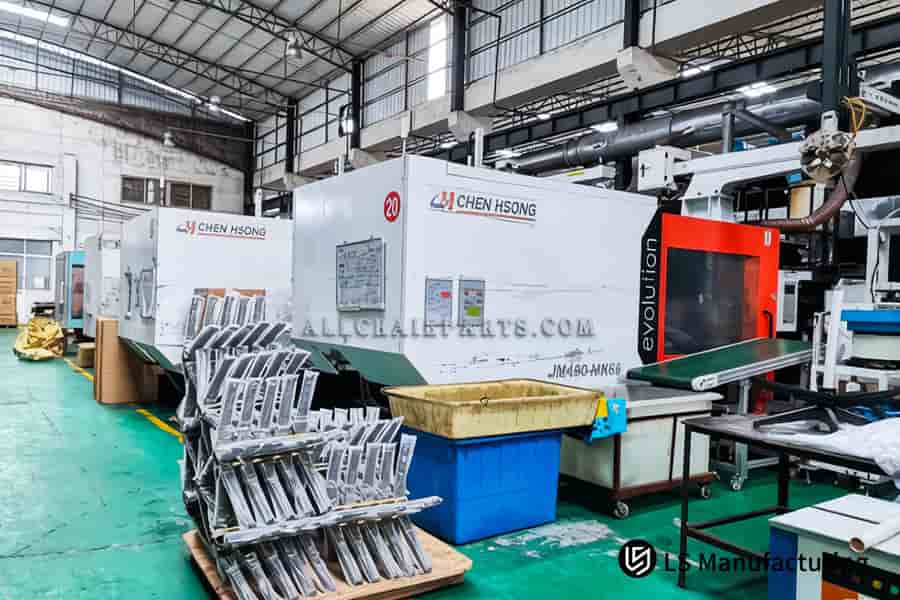
Figure 2: Reinforced nylon injection molding manufactures long automotive brackets on injection machines.
How Does Expert Tnjection Molding Design Services Address Anisotropy And Glass Fiber Orientation Challenges
The issue of random glass fiber orientation in reinforced nylon injection molding causes serious anisotropy and unexpected part failures. Our simulations and precise designs help us anticipate and manage fiber orientation issues and convert a weak point into a strong one.
| Design Focus | Technical Strategy & Outcome |
| Predictive Simulation | Nylon injection molding flow analysis is used to simulate the movement of melts, thereby predicting fiber orientation ahead of mold tooling to identify weak areas. |
| Gate Optimization | Fiber orientation can be controlled through effective gate size selection and placement, such as using 1.5mm to 2.5mm valve gates. |
| Weld Line Mitigation | Weld lines are strategically positioned or avoided entirely to prevent their associated 50% loss of strength. |
| Geometry Control | Ensuring consistent transition of walls at uniform intervals from 2.0mm to 3.5mm prevents any issues with flow and helps avoid areas of fiber build-up. |
| Process Definition | We will determine the critical nylon injection molding process parameters (speed, pressure), which are needed to set the designed fiber orientation. |
| Validation Protocol | Our custom nylon injection molding services include molding trials and nylon injection molding validation testing to correlate simulation predictions with actual part performance, ensuring reliability. |
Our approach allows us to develop a deterministic approach to handling the anisotropy problem. We go beyond basic design by performing simulation and geometry control in order to avoid and resolve issues before they arise. Control glass fiber orientation and eliminate 50% weld line weakness. To achieve this predictable strength, submit your nylon part design for a flow analysis and a validated production solution.
Why Is Precise Mold Temperature Control Crucial For Achieving Precision Nylon Injection Molding Quality
The reason for the warpage and deviation from desired dimensions during precision nylon injection molding is due to the variation in crystallinity. The core problem can be addressed through a protocol that controls the crystallization kinetics of the polymer via proper thermal and pressure management. Our methodology aims at managing the nylon injection molding cooling phase to have total control over the resulting material characteristics and dimensions.
Establishing the Crystalline Stability Zone
A closed-loop mold temperature control system can help maintain stability within the 100°C to 120°C range. Such a controlled range is necessary in order to obtain crystallinity of 35% to 40% since anything lower than 80°C would result in the under-crystallized material experiencing post-molding shrinkage. It is precisely through such a process that we have come to be recognized as a custom nylon molding manufacturer.
Synergistic Pressure & Temperature Control
The process of crystallization is managed by coordinating the thermal conditions with a specific nylon injection molding pressure profile. A pressure of 80MPa to 110MPa is employed to address the volumetric shrinkage during the crystallization stage. The coordination of the temperature and pressure in nylon injection molding operations is crucial for obtaining consistent results from the OEM nylon injection molding process, resulting in densely filled products.
Process Lock-In for Repeatable Precision
The confirmed thermal and pressure values are firmly set inside the machine controller for every batch. SPC is employed to monitor production, ensuring that all the pieces maintain their shape within the range of ±0.02mm. Such thorough validation proves the efficiency of our nylon injection molding thermal management technique, maintaining dimensional accuracy from batch to batch.
This systematic methodology engineers the crystallization environment itself, integrating precise thermal management with coordinated pressure phases. We deliver guaranteed precision for OEM nylon injection molding by treating the process as a predictable chemical transformation, not just a shaping operation, which sets the standard for high-performance manufacturing.
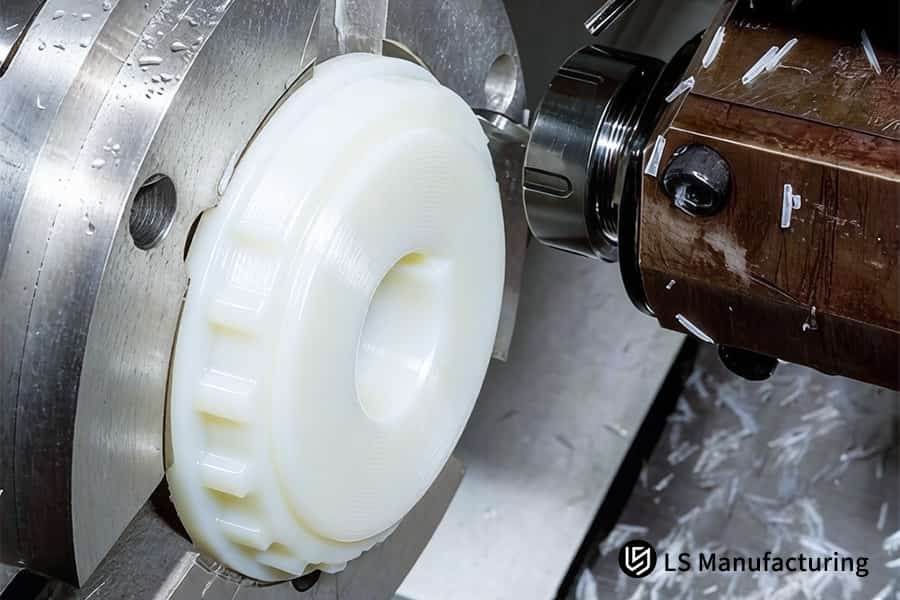
Figure 3: High strength nylon injection molding processes white nylon material in a cooled steel mold for industrial parts.
How Can A Professional Custom Nylon Molding Manufacturer Eliminate Internal Stress And Severe Warpage Issues
A high level of warping beyond 1.5% in high strength nylon injection molding parts is caused by non-uniform shrinkage and stress within the material. This article outlines an effective approach for overcoming such problems by controlling the entire process from injection molding until after processing.
| Technical Challenge | Our Engineering Solution |
| Non-Uniform Shrinkage | Utilize multi-step pack pressures (100% to 40%) to gradually address shrinkage issues. |
| Differential Cooling | Maintain multi-zone precision temperature control (±1.5°C) for consistent cooling. |
| Residual Molded-In Stress | Adopt a post-molding annealing and conditioning technique at 100°C. |
| Process Validation | Conduct a nylon injection molding process design and validation procedure for stress-free parts. |
| Production Consistency | Establish optimized nylon injection molding warpage control parameters for consistency. |
This method creates a holistic approach to warpage control based on the active regulation of the process of solidification and stress reduction. We address the fundamental issue of warpage through the combination of regulated pressure drop with precise thermal control and post-processing. This allows us to create parts for our nylon 6/6 injection molding service that keep their designed geometry, which is the key feature of a reliable nylon injection molding stress relief that we offer as a custom nylon molding manufacturer.
What Structural Elements In Automotive And Heavy Industry Demand Robust OEM Nylon Injection Molding Capabilities
The automotive and heavy industry require parts that can survive tough operating environments characterized by intense thermal, mechanical, and chemical stresses, making the need for reliability critical. In this document, we discuss which structural elements require OEM nylon injection molding service along with manufacturing discipline, and explain why the key value is in our closed loop manufacturing process that produces:
Ensuring Reliability Under High-Temperature & Chemical Exposure
Parts such as intake manifolds and valve covers are subjected to constant temperatures of up to 150°C and interaction with fuels and oils. Performance reliability can only be guaranteed with the use of precision nylon injection molding grades that exhibit excellent heat deflection temperature (HDT) properties and natural chemical resistance. The nylon injection molding process itself is further strengthened by stringent drying procedures to keep moisture levels of the nylon parts below 0.02%.
Achieving Dimensional Precision for Sealing & Assembly
Mechanical gears, bearing housings, and oil seal carriers need superior dimensional accuracy for proper sealing and assembly. Our expertise in reinforced nylon injection molding allows us to deliver high levels of stiffness and creep resistance. These are made possible with optimized nylon injection molding cooling time and precise mold design. This results in accurate fits of our transmission guides and sensor housings that are within sub-0.05mm tolerance.
Managing High Dynamic Loads and Vibration
Parts in powertrains and heavy machinery are subjected to vibration and shock all the time. We use high-tech engineering plastics, typically glass- or mineral-filled, for their strength to weight characteristics and resistance to fatigue. As part of our nylon injection molding process validation, we conduct vibration tests to ensure that the components that leave our plant, such as engine mounts or connector housing shells, do not crack due to fatigue.
Guaranteeing Supply Chain Integrity with Closed-Loop Control
In cases of OEM nylon injection molding orders on a large scale, consistency is key. A fully automated closed loop process from central drying to 100% in cavity pressure monitoring is done. This production monitoring guarantees that each shot produced will be identical to the previous one, giving the manufacturer the SPC statistics and traceability needed, with no worries about inconsistency from one batch to another which could result in field failure.
Our unique approach goes beyond traditional manufacturing, combining material science, exacting engineering, and statistical process control into one cohesive process. Our team takes on the difficult task of making the complex and high-stress nylon parts function perfectly in harsh conditions, ensuring that our company is known as a reliable manufacturer.
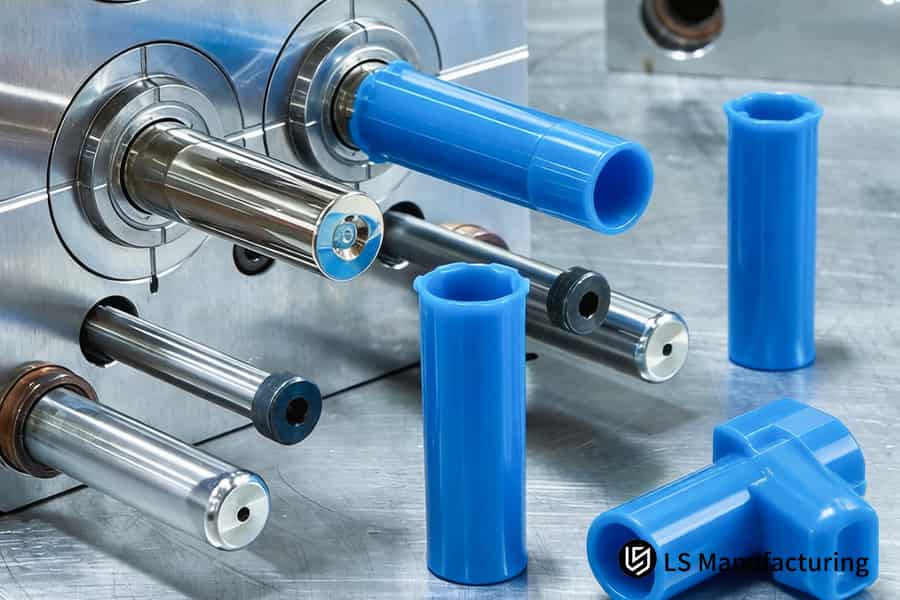
Figure 4: Custom nylon injection molding services produce reinforced nylon 6 gear blanks for automotive transmission systems.
Case Study: How LS Manufacturing Engineered A 45% Glass Reinforced Nylon Gear For An Automotive Tier 1 Supplier
Tier 1 Global Supplier of Automotives suffered from a major malfunction in their electric trunk drive due to poor fiber orientation that contributed to a fracture in the gear. In the following case study, we show how our injection molding design services and knowledge about materials improved the part and solved glass reinforced nylon molding issues:
Client Challenge
This original PA66-GF30 gear, which went through conventional single gating, showed failure at 45Nm and 125°C. Inadequate fiber dispersion generated weaknesses around the tooth roots, thus causing frequent cracks. Poor dimensional stability resulted in a tolerance deviation of more than ±0.04mm within the tooth profile, contributing to an 18% scrap rate during pilot production and threatening the project schedule and feasibility. These challenges required an extensive overhaul of the entire nylon injection molding process redesign.
LS Manufacturing Solution
To resolve this problem, we undertook an engineering re-assessment of the part. We changed the material to our proprietary 45% short-glass-fiber reinforced nylon. The conventional single gating was changed to our patented three-gate sequential hot-runner system, allowing alignment of the fiber orientation along the tooth profiles—a breakthrough technology of our custom nylon injection molding services. The mold was run under 105MPa packing pressure at 115°C, with a post-molding annealing process.
Results and Value
The results of testing the custom designed gears showed a flawless pass rate with regards to destructive testing of torque 50 Nm, where no items failed. The hardness of the surfaces was measured at HRR 115, while the tolerance level with regard to the critical tooth profile was within ±0.015mm. Thanks to optimized nylon injection molding cycle time with regards to nylon material, the scrap percentage has decreased to zero. Our milestone with regard to reliability, combined with optimized injection cycle, provided a 32% cost saving for the customer’s component.
This case is a perfect representation of how our engineering approach works. By identifying the reasons why a system fails, we implement solutions involving knowledge of material sciences, machinery, and precision in manufacturing processes.
Stop tolerating 18% scrap from poor fiber orientation. Replicate our 0% scrap, 50Nm-torque-proven gear process. Contact our engineers to validate a solution for your reinforced nylon components.

Why Choosing LS Manufacturing As Your Strategic Nylon 6/6 Injection Molding Service Partner Guarantees Supply Chain Agility
From a technical buyer’s point of view, reliable delivery, intellectual property, and speedy responses are critical in making their purchasing decision in business to business dealings. This document provides information regarding how we manage to overcome such supply chain problems. Working with LS Manufacturing as your partner for nylon 6/6 injection molding service, turns the supplier into a strategic engineering team.
A Foundational Quality & Compliance Framework
- Certified Systems: Our company is certified by both IATF 16949 and ISO 9001 for a credible process for defect prevention and improvement.
- Closed-Loop Production: From automation at the drying phase (<0.02% moisture) to fully automatic CMM inspection, we can be described as a custom nylon molding manufacturer.
- Proactive Control: We practice live nylon injection molding quality control through use of SPC to track and address process variation that may result in nonconforming components.
IP Protection & Collaborative Engineering
- Secure Protocols: Client designs are carried out strictly under NDA using our highly secured internal systems and production framework.
- Concurrent Engineering: We deliver preliminary DFM analysis that takes into account the design geometry with respect to the part’s cost-effectiveness, performance, and yield. This aspect plays a crucial role in our service offering.
- Rapid Transition: Our nylon injection molding manufacturing process involve implementing SPC to ensure that there is no variance in the process leading to non-conforming parts.
Vertical Integration for Unmatched Responsiveness
- End-to-End Control: In-house services, starting from mold design and machining to the process of molding, eliminate any dependency or necessity for external communication.
- Agile Response: It is essential to have the capability to perform swift engineering changes (ECO) while working on OEM nylon injection molding projects.
- Strategic Planning: Together we can build a plan for our nylon injection molding supply chain based on forecasts where we will have stockpiling of materials and scheduling to ensure that delivery is prompt.
Not only do we provide components, but we also provide peace of mind. How so? Our vertically integrated business model, certified quality management systems, and cooperative engineering make all the difference. We don't give you just parts, but also a reliable supply chain backed up by adaptability, protection of intellectual property, and component supply.
FAQs
1. How do you ensure that the surface of high-rigidity glass-fiber-reinforced nylon injection-molded parts does not exhibit severe "fiber exposure" (floating fiber) issues?
We use highly precise oil temperature controllers to ensure that the surface temperature is maintained at temperatures higher than 110°C. At the same time, we accelerate the melt-filling rate and shearing rate, which will force the nylon matrix to encapsulate the glass fiber at a very fast rate. This will result in a layer of resin that coats the surface effectively, and there will be no microscopic defects present on the surface.
2. Given the susceptibility of precision nylon parts to water absorption and subsequent deformation, does LS Manufacturing perform any special conditioning treatments prior to shipment?
Right after demolding, we carry out a conditioning and annealing process using water at 100°C. In this manner, the nylon absorbs the maximum amount of moisture it needs to take in and relieves all stress inside the nylon parts before shipping, ensuring dimensional stability of the finished part within the nylon injection molding design tolerance.
3. When commissioning custom molds for high-strength nylon parts, do your injection molding design services include complimentary DFM (Design for Manufacturability) and mold flow analysis?
Yes. For any engineering inquiry submitted to LS Manufacturing, our team of senior engineers will provide a comprehensive, end-to-end DFM review report—free of charge—within 24 hours. This report includes predictions regarding glass fiber orientation, optimization of weld line placement, and assessments of potential porosity risks. If you have any requirements, you are welcome to request a quote.
4. What is the maximum glass fiber fill ratio you can process in modified, reinforced nylon materials, and what level of tensile strength can be achieved?
We possess extensive expertise in compounding specialized materials, enabling us to reliably mass-produce Nylon 6/6 reinforced with up to 50%—or even 60%—glass or carbon fibers. While aluminum die-casting triggers high tooling costs and post-machining waste, custom nylon injection molding achieves equivalent tensile strength (>210 MPa) with 30% lower weight.
5. Why does LS Manufacturing hold a distinct advantage over standard injection molding facilities when manufacturing high-dynamic-stress components, such as nylon threaded parts or gears?
This is because we go beyond merely monitoring tooth profiles via CMM; we also utilize sequential hot runner technology to precisely eliminate weld lines at the gear root. Combined with our proprietary automatic thread de-molding mechanism, this approach ensures uniform hardness across every thread flank and gear tooth surface, thereby extending the service life of the components by more than two-fold.
6. For high-end industrial projects requiring rapid market launch, what is the standard lead time for LS Manufacturing’s custom nylon injection molding services?
Leveraging our robust in-house mold design capabilities and intelligent production scheduling system, we can deliver high-precision T1 samples within as little as 12 to 15 business days after receiving the final 3D CAD drawings. Furthermore, we can initiate high-volume automated production within just 7 days of sample approval.
7. How do you prevent high-strength nylon granules from degrading within the high-temperature barrel, thereby compromising the impact strength of the final product?
We have implemented fully enclosed, industrial-grade dehumidifying dryers to strictly reduce material moisture content to below 0.02% prior to injection molding. Additionally, we employ segmented screw temperature control technology to precisely regulate melt residence time, thereby ensuring that the superior mechanical properties of the virgin material are preserved 100%.
8. Once an order is placed, how does LS Manufacturing guarantee that our core technical drawings and proprietary product designs remain confidential and are not disclosed?
We have established a rigorous internal confidentiality protocol; legally binding Non-Disclosure Agreements (NDAs) can be signed even prior to the commencement of business negotiations. Internally, we operate a physically isolated, dedicated digital network wherein access to all technical drawings is restricted solely to core project engineering personnel, thereby providing absolute assurance that your intellectual property remains completely secure.
Summary
Producing high-strength, ±0.02mm-tolerance reinforced nylon parts requires a closed-loop engineering system—from material moisture control and glass-fiber ratio selection, to gate-stress simulation, oil-temperature regulation, and post-molding annealing. Leveraging decades of expertise and IATF 16949 standards, LS Manufacturing turns this complex process into a predictable, quantifiable, industry-benchmark production line.
Don’t let molding defects undermine your engineered systems. If you face warping in nylon structures, gear-tooth breakage, or need expert handling of glass-fiber anisotropy, act now. Click “Get Free DFM Analysis & Mass Production Quote” to upload your STEP/IGES drawings. Our nylon injection molding engineers will provide a custom feasibility report and competitive direct pricing within 24 hours—ensuring your project is realized flawlessly.
📞Tel: +86 185 6675 9667
📧Email: info@lsrpf.com
🌐Website: https://lsrpf.com/
Disclaimer
The contents of this page are for informational purposes only. LS Manufacturing services There are no representations or warranties, express or implied, as to the accuracy, completeness or validity of the information. It should not be inferred that a third-party supplier or manufacturer will provide performance parameters, geometric tolerances, specific design characteristics, material quality and type or workmanship through the LS Manufacturing network. It's the buyer's responsibility. Require parts quotation Identify specific requirements for these sections.Please contact us for more information.
LS Manufacturing Team
LS Manufacturing is an industry-leading company. Focus on custom manufacturing solutions. We have over 20 years of experience with over 5,000 customers, and we focus on high precision CNC machining, Sheet metal manufacturing, 3D printing, Injection molding. Metal stamping,and other one-stop manufacturing services.
Our factory is equipped with over 100 state-of-the-art 5-axis machining centers, ISO 9001:2015 certified. We provide fast, efficient and high-quality manufacturing solutions to customers in more than 150 countries around the world. Whether it is small volume production or large-scale customization, we can meet your needs with the fastest delivery within 24 hours. choose LS Manufacturing. This means selection efficiency, quality and professionalism.
To learn more, visit our website:www.lsrpf.com.